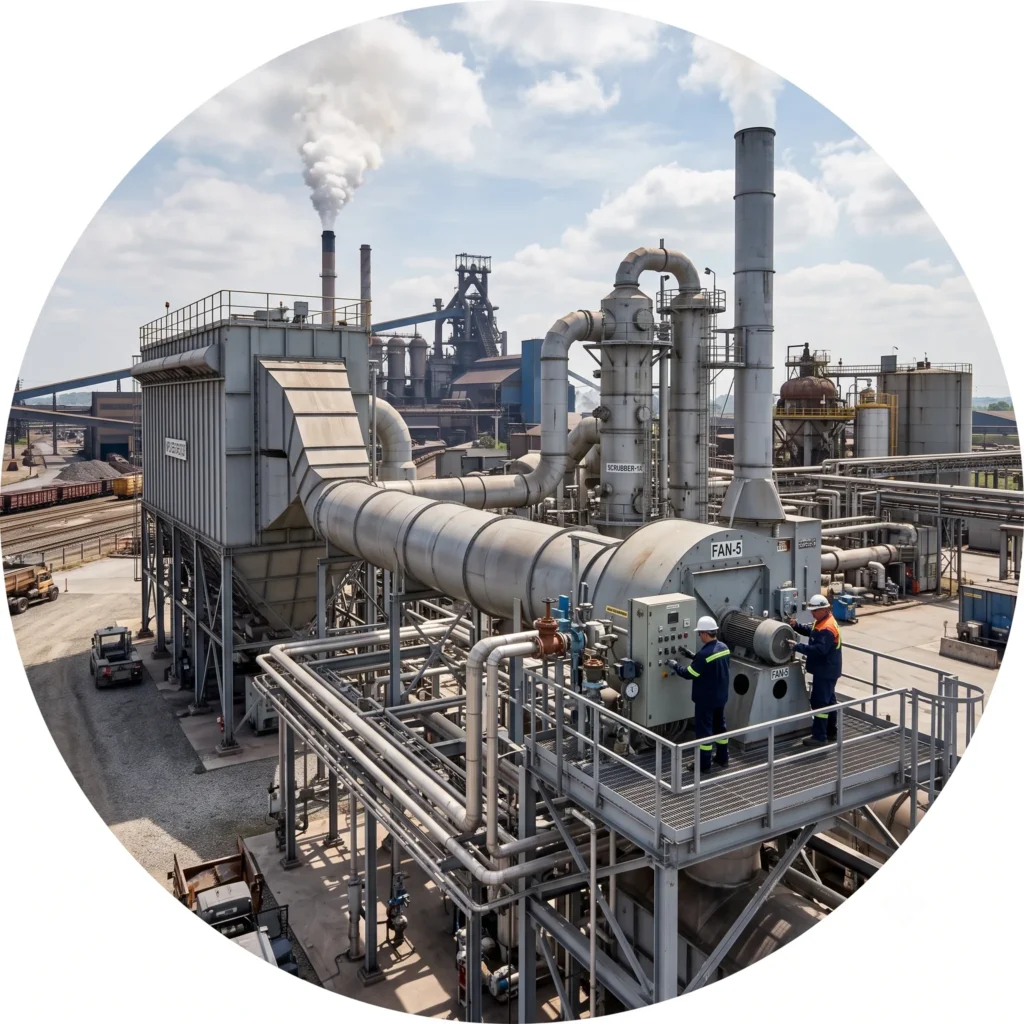
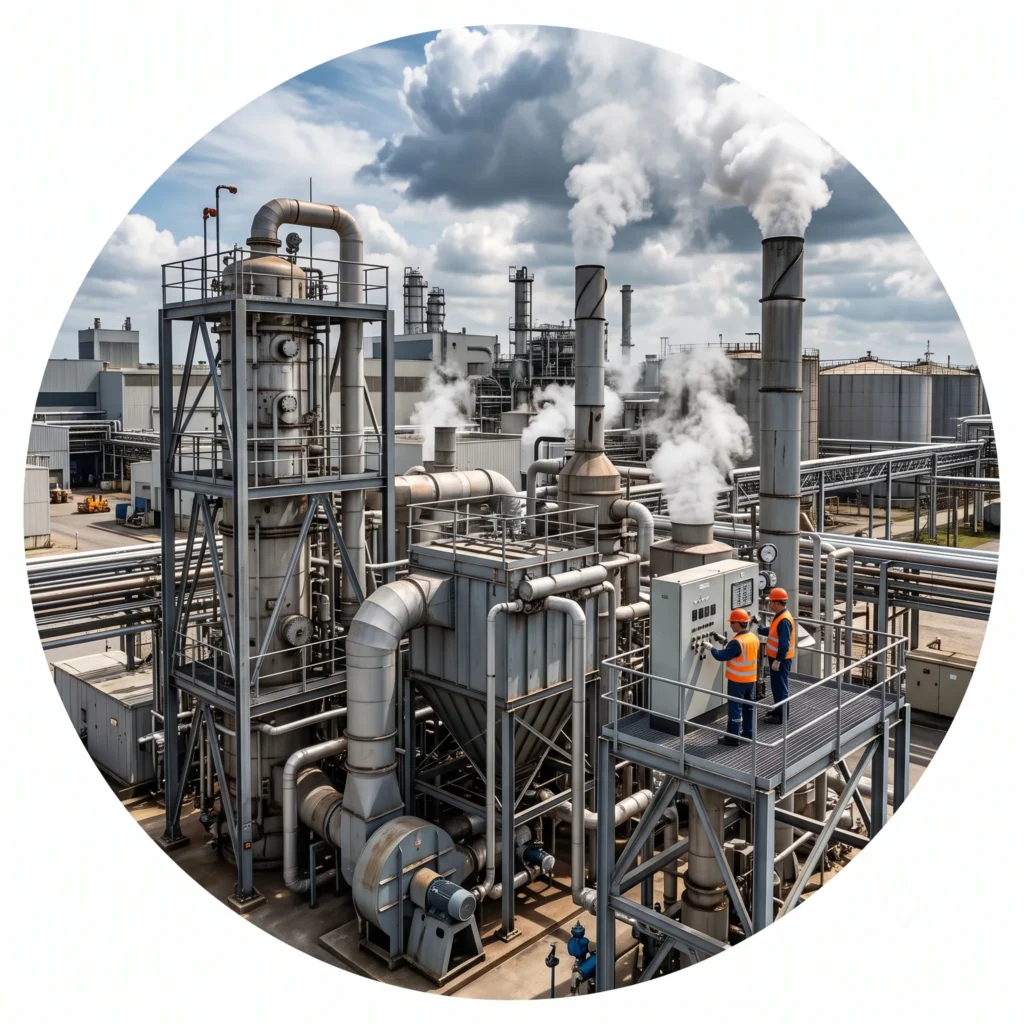
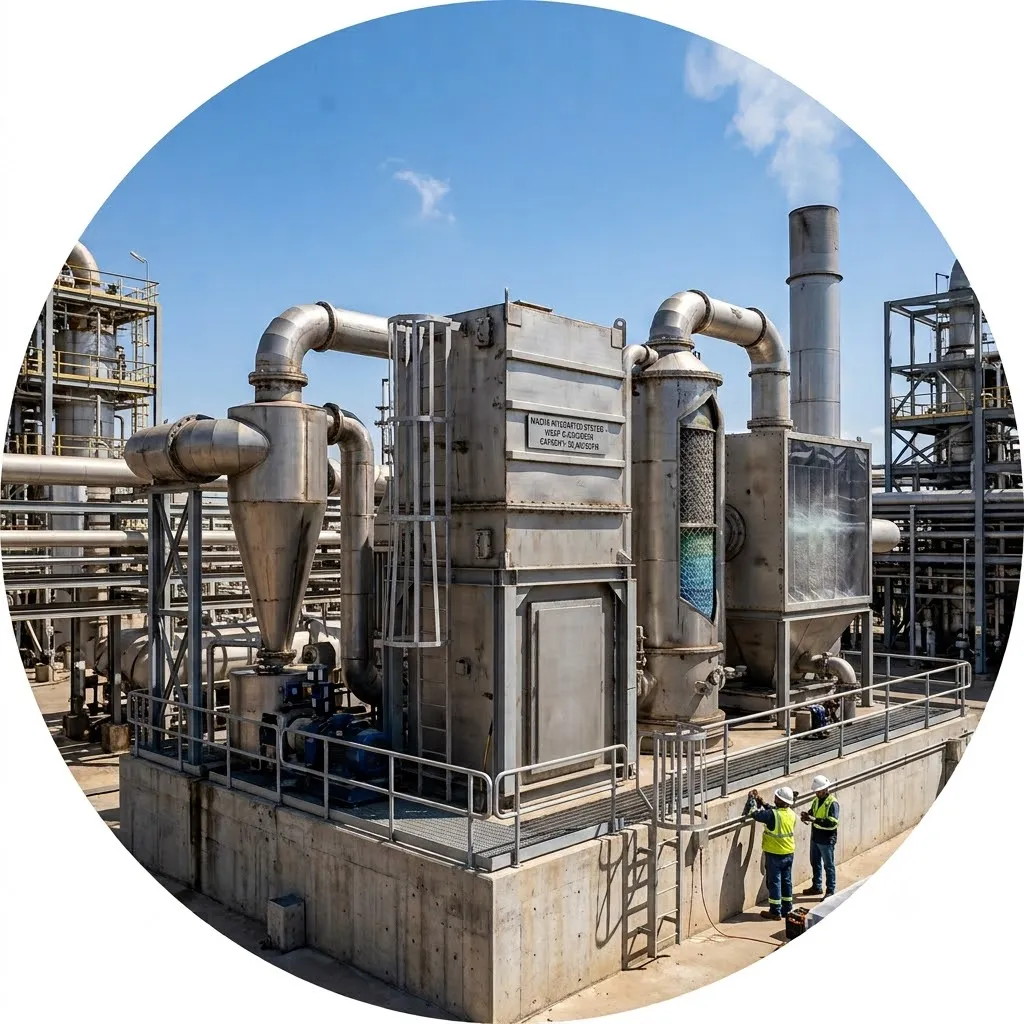
Air Pollution Control Division

Products

Mazda's Air Pollution Control Division - Fume Scrubbers & Wet Electrostatic Precipitators

Mazda Limited designs and manufactures industrial air pollution control equipment for controlling and removing particulates, acid gases, fumes, and other contaminants from industrial process exhaust streams. Our portfolio includes jet venturi fume scrubbers, packed tower scrubbers, high energy fume scrubbers, and wet electrostatic precipitators (WET ESP) — engineered around each application’s gas composition, particulate size, and required removal efficiency rather than supplied as fixed configurations.

Mazda Limited has been engineering and manufacturing process equipment since 1977, with expertise spanning air pollution control, vacuum, and heat transfer technologies, and holds ISO 9001, ISO 14001, and ISO 45001 certification along with PED, IBR, ASME, and U-Stamp compliance.

What Is Air Pollution Control Equipment?

Air pollution control equipment removes particulates, acid gases, and fumes from an exhaust or process gas stream before it’s released to atmosphere, helping plants meet emission compliance requirements and reduce environmental impact. Different pollutants call for different removal mechanisms – wet scrubbing uses a liquid to capture and absorb contaminants, while electrostatic precipitation uses an electric charge to capture fine particulates and mist that scrubbing alone may not fully remove.

What Is Air Pollution Control Equipment?

The right technology depends on the pollutant type (particulate, gas, or both), particle size, gas flow rate, and the removal efficiency required to meet emission limits. Mazda evaluates these conditions before matching an installation to a jet venturi scrubber, packed tower scrubber, high energy scrubber, or WET ESP — often used in combination for multi-stage treatment.

Our Air Pollution Control Equipment Range

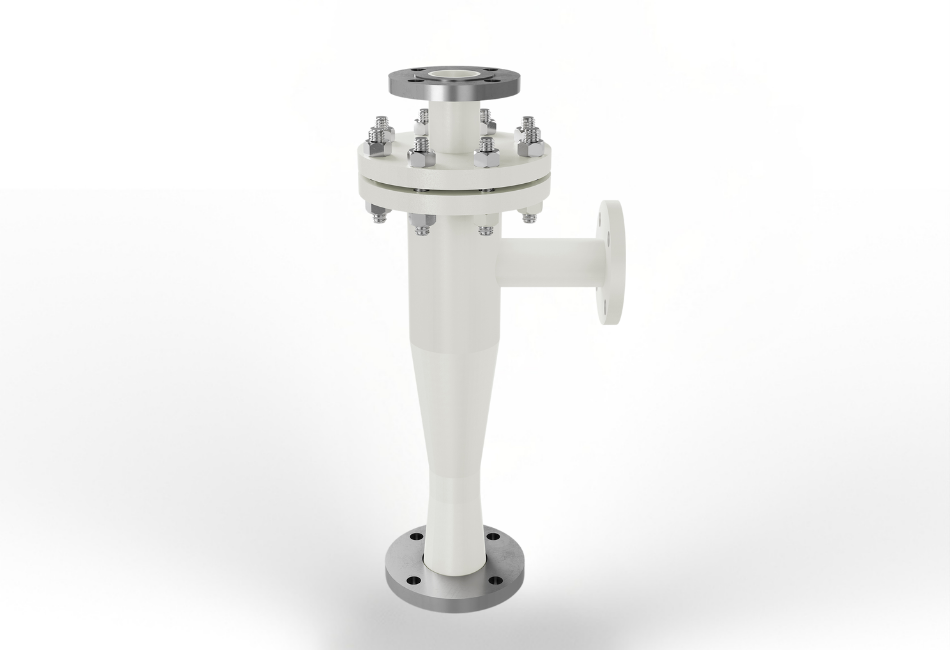
Jet Venturi Fume Scrubbers

Wet Scrubbers

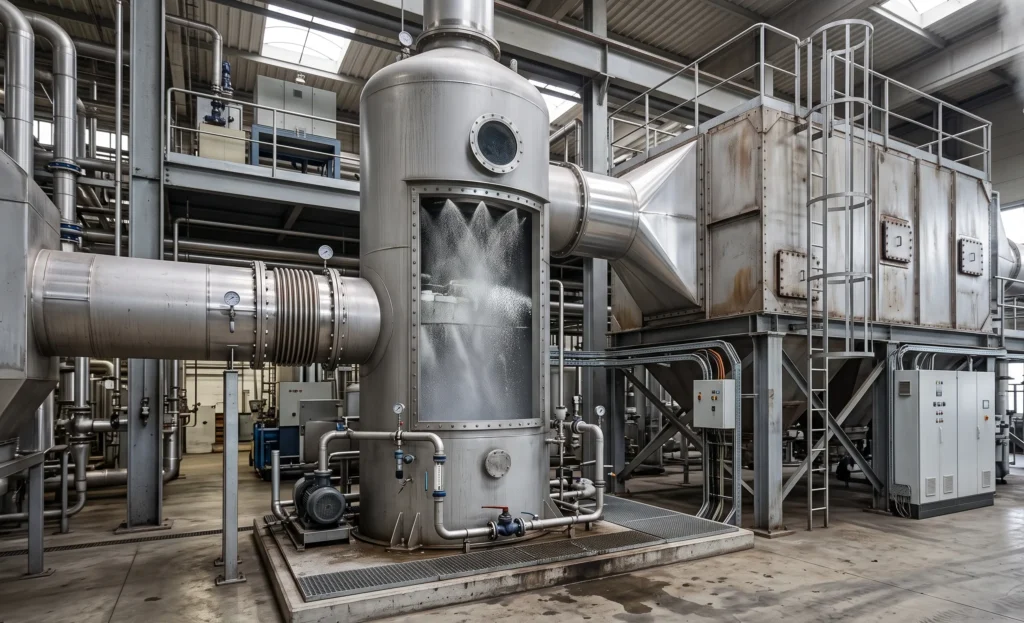
Use a liquid, typically water or a chemical solution, to capture particulates and absorb gaseous pollutants from the exhaust stream.

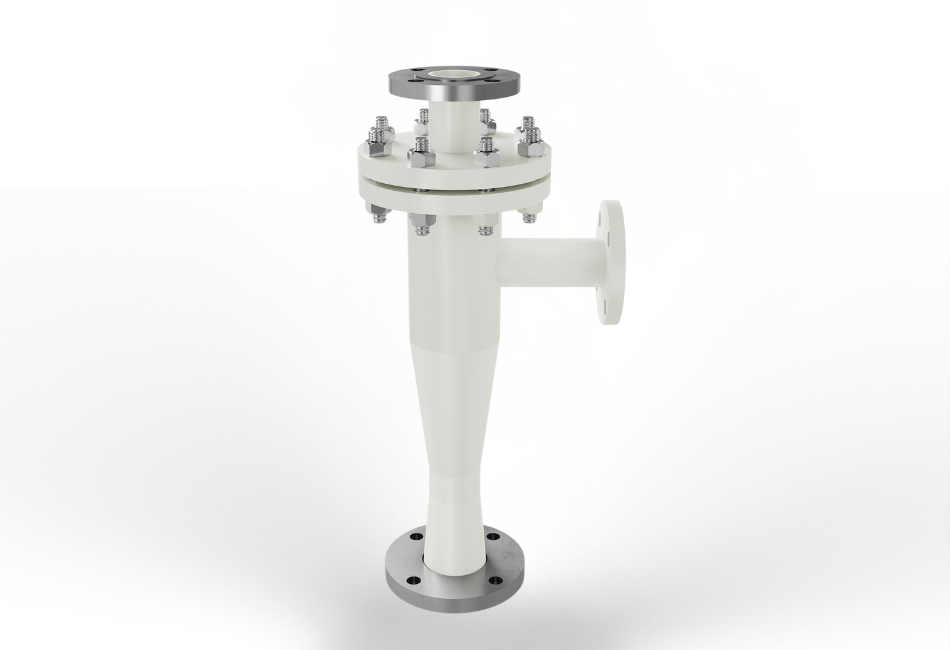
Jet Venturi Fume Scrubbers – use high-velocity liquid injection through a venturi throat to capture particulates and absorb acid gases and fumes such as SO2, HCl, HF, NH3, and SiF4 in a single stage, with no conventional moving parts in the scrubbing section.

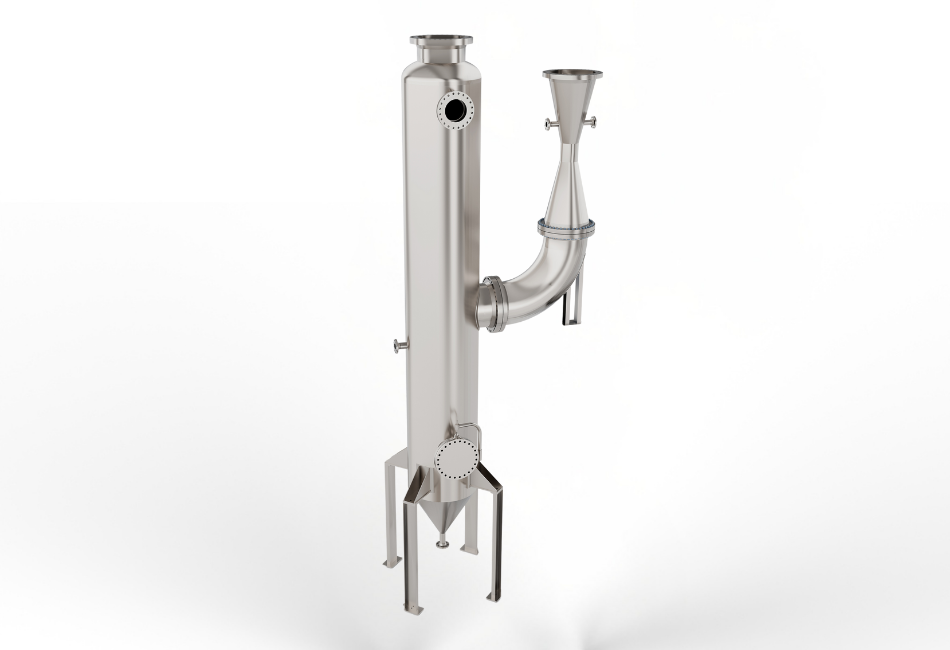
Packed Tower Scrubber – passes gas counter-current through a packed bed irrigated with scrubbing liquid, giving high mass-transfer efficiency for gas absorption duties involving suitable soluble gaseous contaminants such as acid gases.

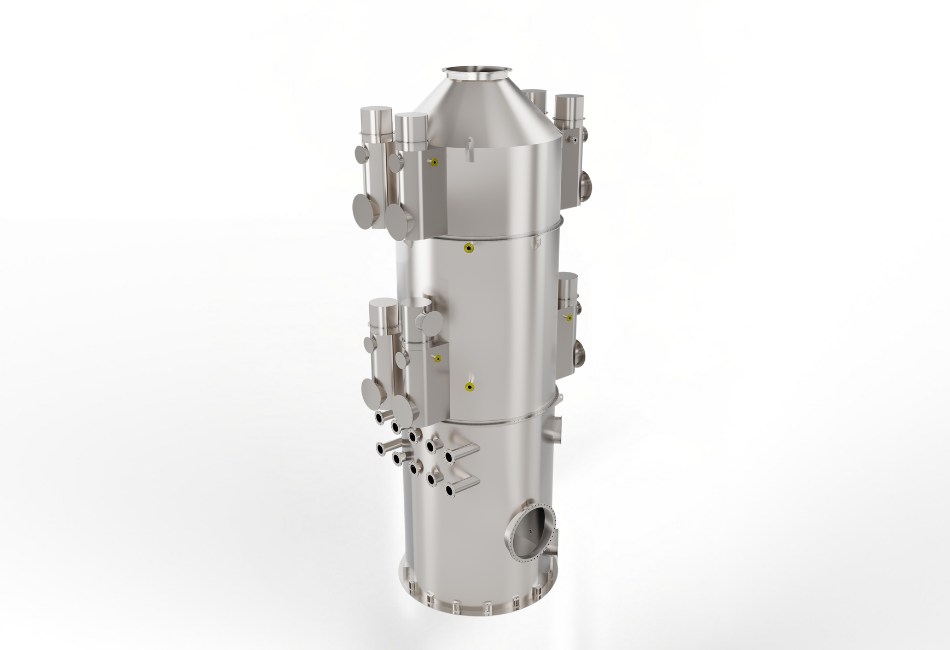
High Energy Fume Scrubber – a high-pressure-drop venturi scrubber designed to capture sub-micron particulates and fumes that lower-energy scrubbers cannot effectively remove.

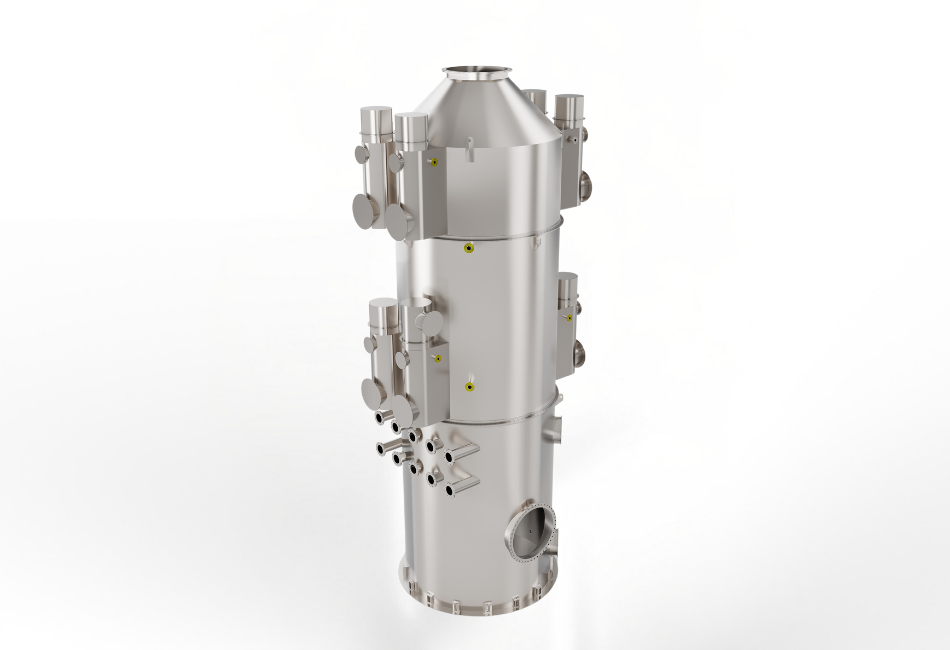
WET ESP

Electrostatic Precipitation

Captures fine particulates and acid mist using an electric charge, commonly used as a polishing stage after wet scrubbing.

WET ESP – a wet electrostatic precipitator that captures sub-micron particulates and acid mist at low pressure drop, typically used downstream of a scrubber for final-stage emission polishing.

How to Select the Right Air Pollution Control Equipment?

Selection depends on the pollutant type and particle size distribution in the exhaust stream, required removal efficiency, gas flow rate, and whether the application needs gas absorption, particulate capture, or both.

Application Requirement Suggested Equipment
Combined particulate capture and acid gas absorption in one stage Jet Venturi Fume Scrubber
High-efficiency gas absorption for suitable soluble contaminants with relatively low particulate loading Packed Tower Scrubber
Fine or sub-micron particulate and fume capture High Energy Fume Scrubber
Final-stage polishing of sub-micron particulates and acid mist WET ESP

Mazda’s engineering team evaluates the exhaust stream’s composition and the plant’s emission targets before recommending a configuration – often a combination of stages – rather than offering a fixed, off-the-shelf system.

Applications of Air Pollution Control Equipment

Particulate Removal

captures solid and liquid particulates from process exhaust before discharge to atmosphere

Acid Gas Scrubbing

absorbs acid gases such as SO2, HCl, and HF from exhaust streams

Fume & Mist Control

captures fine fumes and aerosol mist that standard scrubbing may not fully remove

Emission Control

supports industrial processes in achieving applicable particulate and gas emission requirements

Odor Control

treats selected odor-producing gases where the contaminants are suitable for wet scrubbing

High-Temperature Gas Cleaning

appropriately designed wet scrubbing systems can treat gas streams at elevated temperatures, subject to process-specific design

Industries & Applications

Mazda’s air pollution control equipment can support applications across:

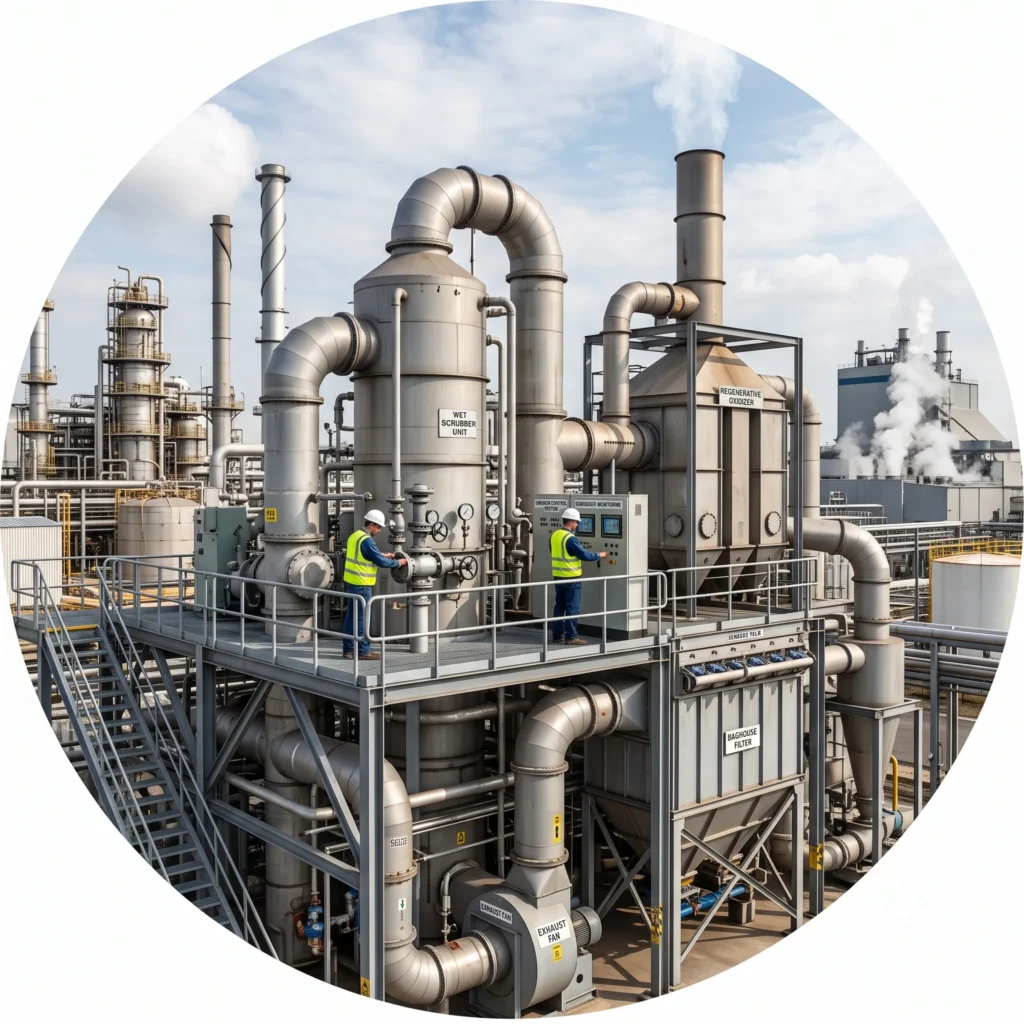
air pollution control equipment for Chemical Processing Industries

Chemical Processing

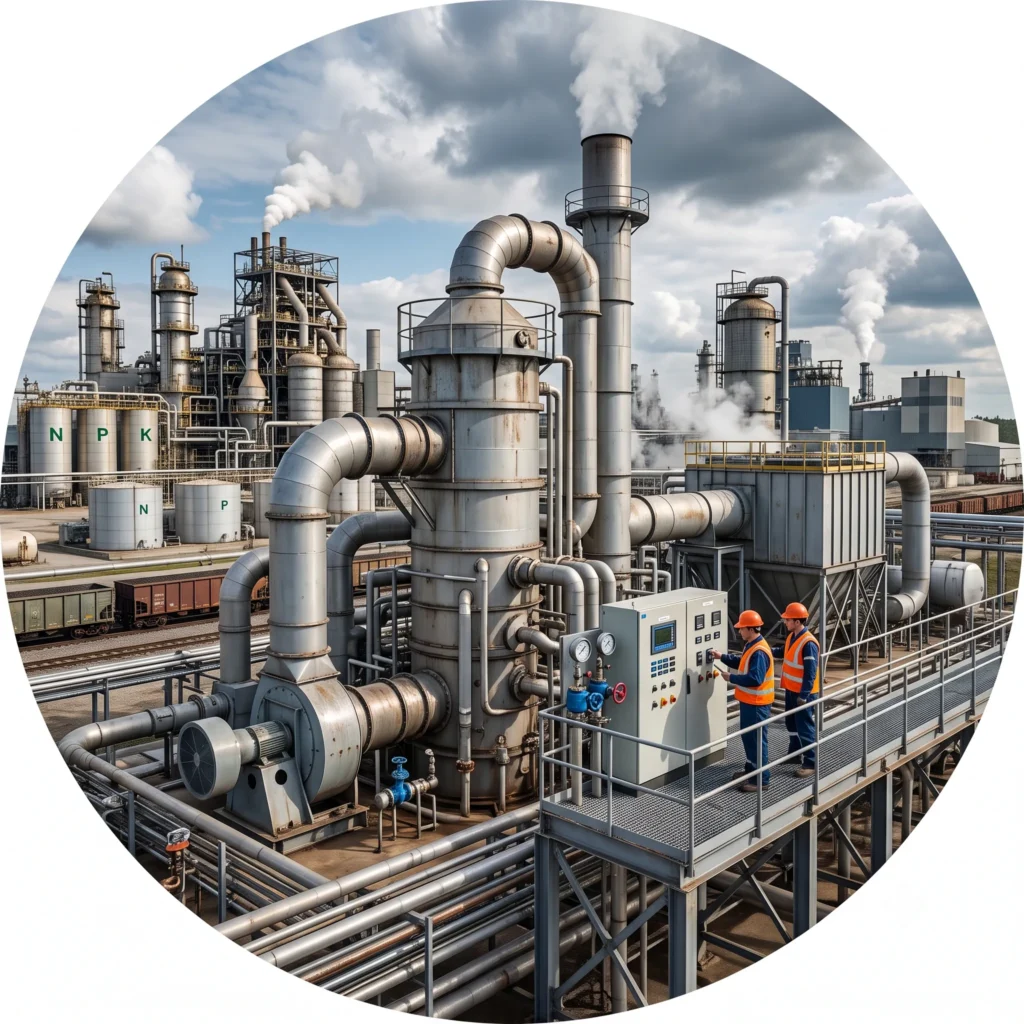
air pollution control equipment for Fertilizer Manufacturing Industries

Fertilizer Manufacturing

air pollution control equipment for Metallurgical & Steel Processing Industries

Metallurgical & Steel Processing

air pollution control equipment for Industrial Process Exhaust Treatment Industries

Industrial Process Exhaust Treatment

Why Mazda for Air Pollution Control Equipment?

Mazda’s Air Pollution Control Division engineers scrubbing and precipitation systems around each plant’s specific exhaust composition and emission targets, backed by ISO 9001, ISO 14001, and ISO 45001 certification, PED compliance, and IBR, ASME, and U-Stamp accreditation across the company. Customers get in-house engineering and after-sales technical assistance for both domestic and export projects.

Why Mazda for Air Pollution Control Equipment?

Frequently Asked Questions

What is a fume scrubber used for?

A fume scrubber removes particulates and absorbs gaseous pollutants from an exhaust stream by contacting the gas with a liquid, helping plants meet emission compliance requirements before discharge to atmosphere.

What are the different types of air pollution control equipment?

Common industrial air pollution control technologies include venturi scrubbers, packed tower scrubbers, high-energy scrubbers, and wet electrostatic precipitators. The appropriate technology depends on the type and concentration of pollutants, gas flow rate, particle size, operating conditions, and required removal efficiency.

What is the difference between a jet venturi scrubber and a packed tower scrubber?

A jet venturi scrubber uses high-velocity liquid injection through a venturi throat to capture particulates and absorb gases such as SO2, HCl, HF, NH3, and SiF4 in a single, compact stage, suited to combined particulate and gas removal. A packed tower scrubber passes gas counter-current through a liquid-irrigated packed bed, giving higher mass-transfer efficiency for gas absorption but is less suited to high particulate loads due to fouling risk.

What does a high energy fume scrubber do?

A high energy fume scrubber uses a high-pressure-drop venturi design to capture fine or sub-micron particulates and fumes that standard, lower-energy scrubbers cannot effectively remove.

What is a WET ESP?

A WET ESP (wet electrostatic precipitator) uses an electric charge to capture fine particulates and acid mist from an exhaust stream at low pressure drop, commonly installed downstream of a scrubber as a final polishing stage.

How do I select the right air pollution control equipment?

Selection depends on the pollutant type (particulate, gas, or both), particle size distribution, gas flow rate, and the removal efficiency required to meet emission limits. Mazda's engineering team evaluates these factors before recommending a configuration, which may combine multiple stages.

Can air pollution control systems be customized for an existing plant?

Yes. Mazda's scrubbers and WET ESP systems are engineered to each plant's exhaust composition, flow rate, and emission targets, including retrofits and multi-stage system integration.

Does Mazda manufacture complete emission control systems or individual components?

Both. Mazda supplies complete multi-stage air pollution control systems as well as individual scrubbers and WET ESP units for existing installations.

Can different air pollution control technologies be combined?

Yes. Scrubbing and precipitation technologies are often used in sequence where a process generates multiple contaminant types or a range of particle sizes — for example, a venturi or packed tower scrubber for bulk particulate and gas removal, followed by a WET ESP for fine particulate and mist polishing. The appropriate combination depends on the specific gas stream and required removal performance.

<< 1 >>


Explore Mazda's Air Pollution Control Equipment

Explore our range of fume scrubbers and electrostatic precipitation equipment to find the technology suited to your emission control requirements.

For any inquiries or assistance, our team is ready to offer professional support and guidance. Reach out to us, and we will respond promptly to meet your needs.

Request a Demo – Share Your Info