Heat Transfer Equipment & Industrial Heat Transfer Solutions
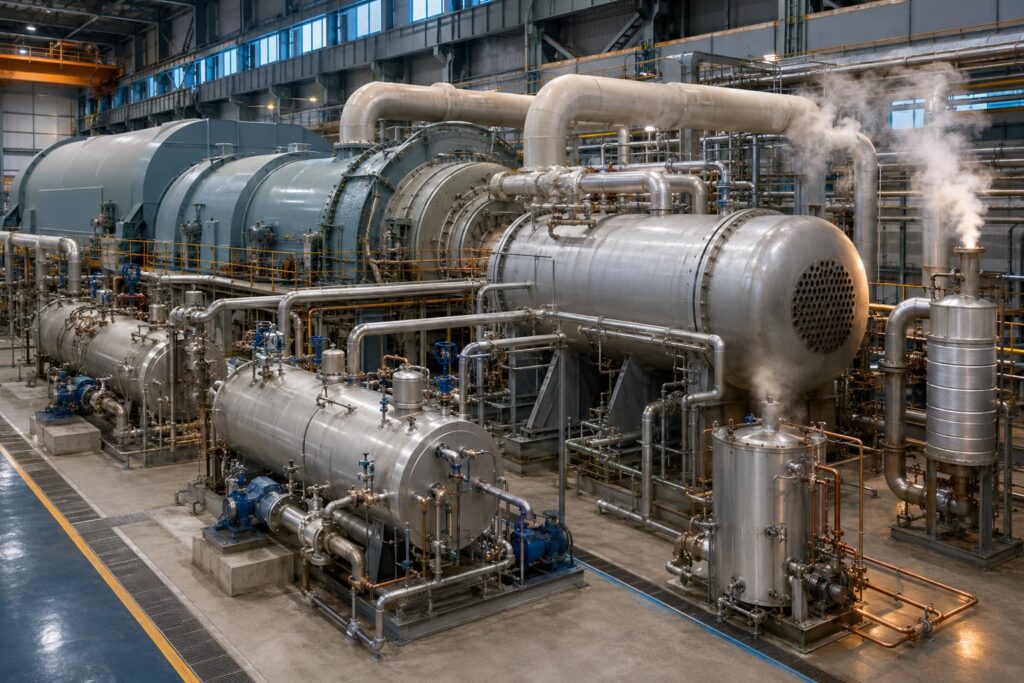
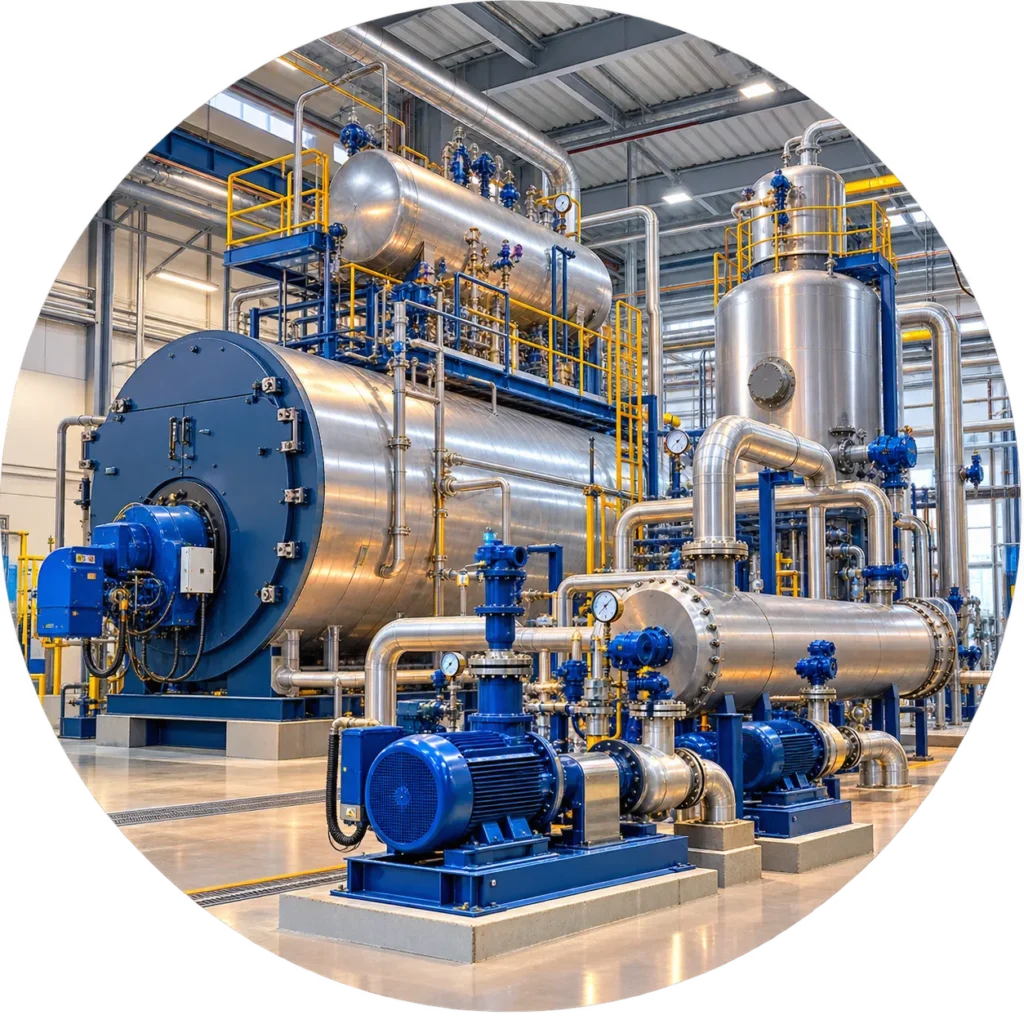
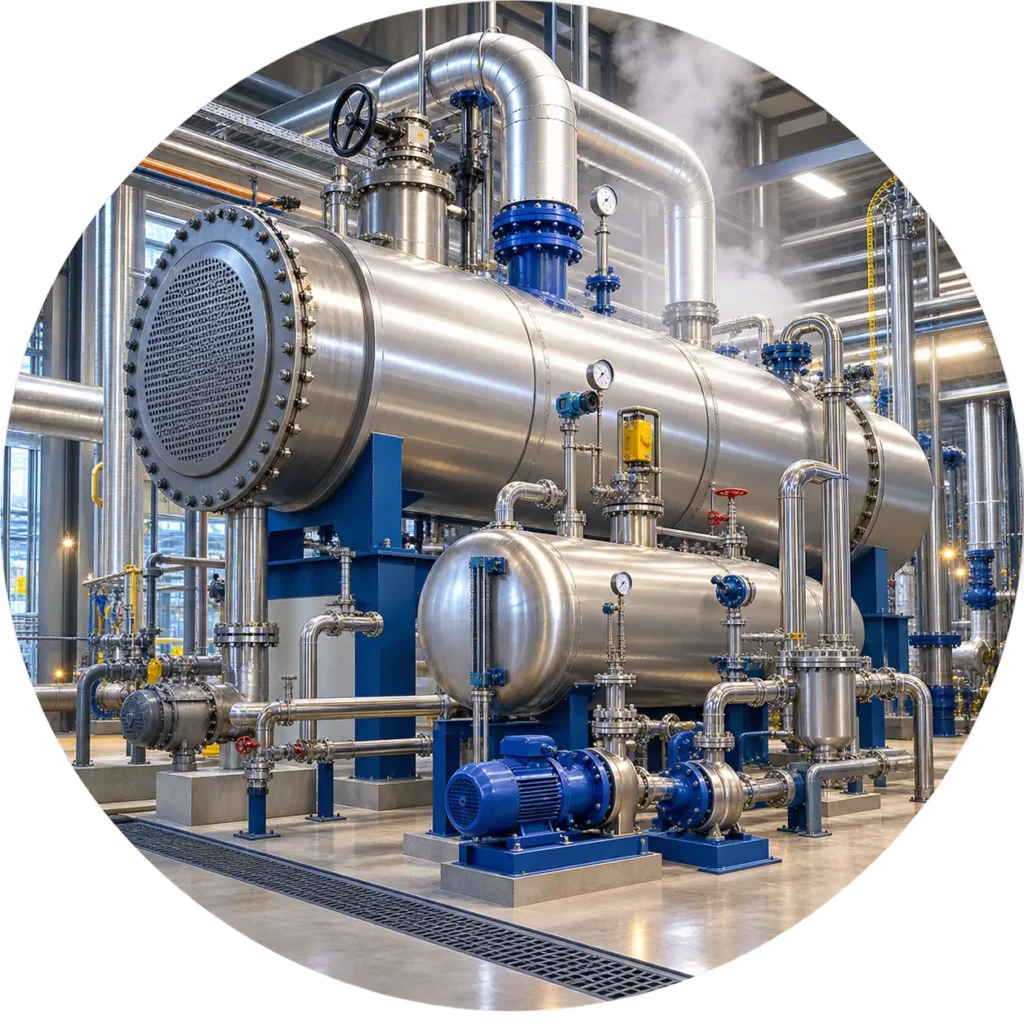
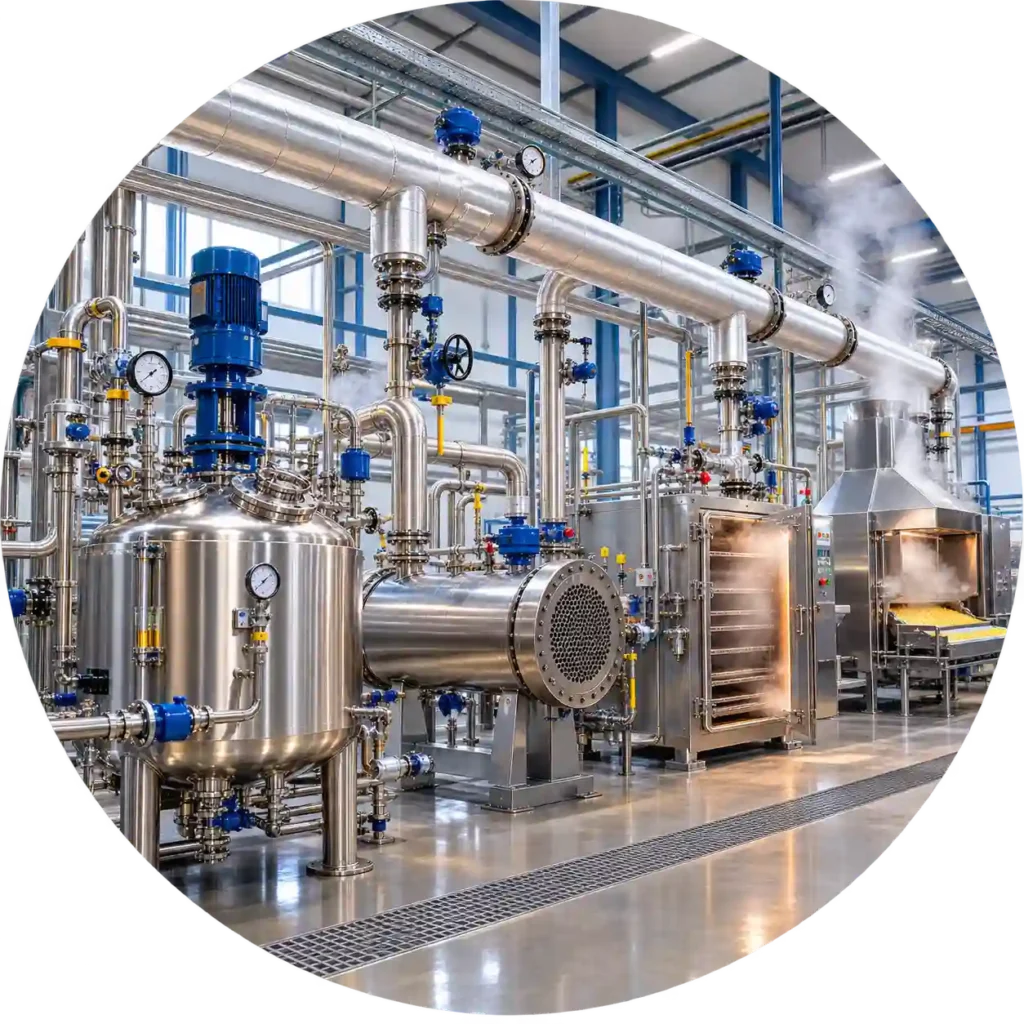
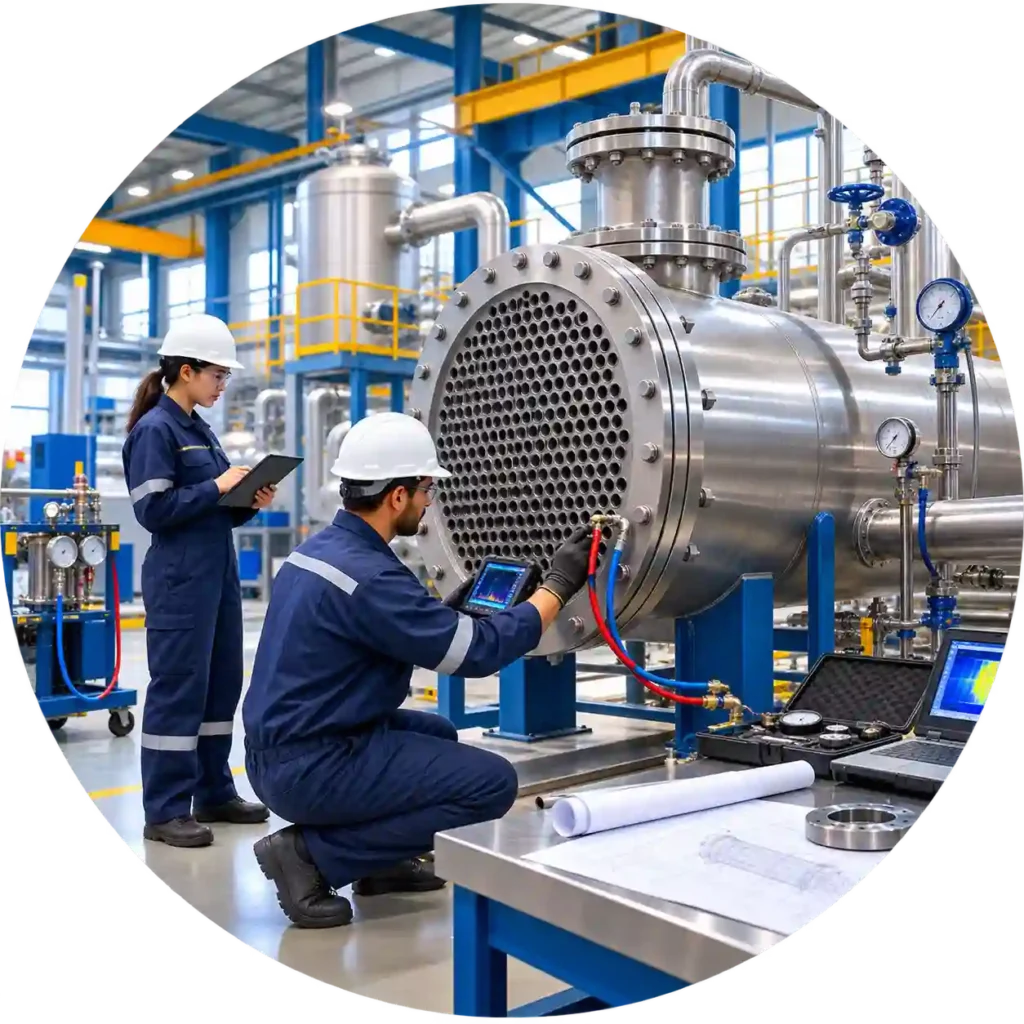
Mazda Limited designs and manufactures industrial heat transfer equipment for power generation and other process applications where efficient heat recovery, steam condensation, and controlled thermal energy transfer are essential. Our portfolio includes Condensing Systems, HP and LP heaters, Gland Steam Condensers, Dump Condenser and Dump tubes – engineered around each plant’s operating pressure, temperature, steam flow, and installation conditions rather than supplied as fixed configurations.
Mazda Limited has been engineering and manufacturing process equipment since 1977, with expertise spanning heat transfer and vacuum technologies, and holds ISO 9001, ISO 14001, and ISO 45001 certification along with PED, IBR, ASME, and U-Stamp compliance. Within this, the Heat Transfer Division designs equipment to ASME, HEI, and TEMA standards, with systems installed across multiple continents.
Heat transfer equipment transfers thermal energy between two or more process streams without necessarily mixing them. In a power plant’s steam-water cycle, this equipment sits at specific points between the turbine and the boiler – condensing exhaust steam, preheating feedwater with extraction steam, recovering gland sealing steam, and managing steam that bypasses the turbine during startup, shutdown, or trip conditions.
Equipment selection depends on required heat duty, operating pressure and temperature, flow rate, and where the equipment sits in the plant’s steam cycle – a Condenser, Feedwater heater, Gland Steam Condenser, Dump Condenser or Dump Tube each serves a different stage of that cycle.
Our Heat Transfer Equipment Range
Condensing Systems
Convert steam into condensate, recovering thermal energy while maintaining the pressure conditions the turbine or process needs. Mazda delivers custom configurations tailored to specific vacuum and plant requirements:
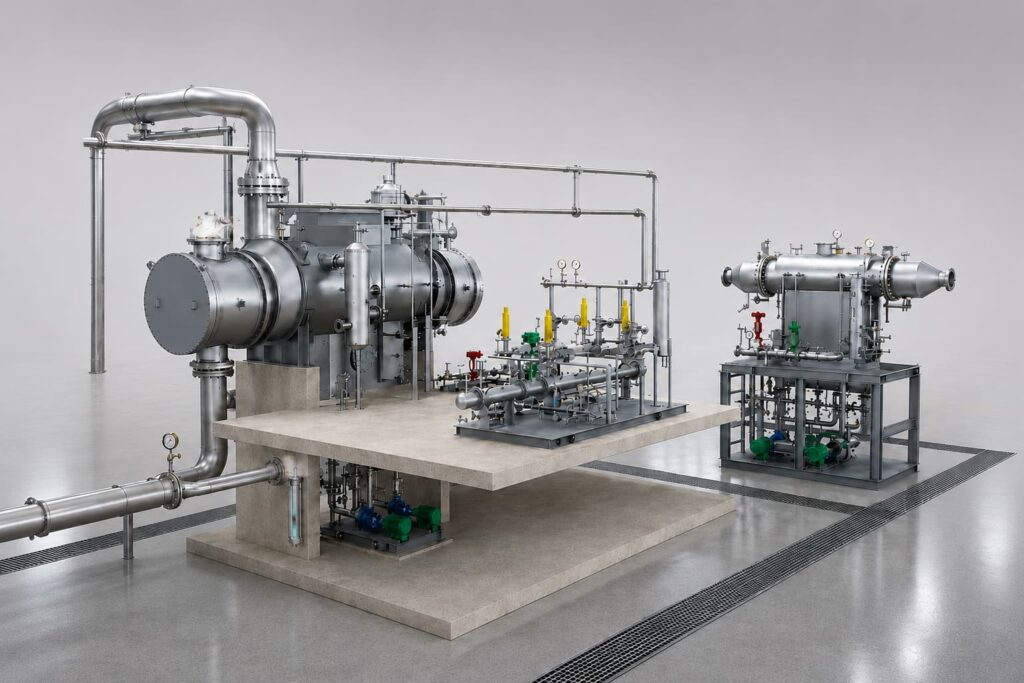
Condensing System – a condensing system designed for integration with Surface Condensers, Steam Jet Air Ejectors (SJAE), Gland Condensers, and associated steam-cycle equipment — including designs for Geothermal applications.
Dump Condensing System – condenses steam diverted directly from the boiler when the turbine is offline or during startup, shutdown, or trip conditions, protecting the boiler while recovering the bypassed steam as usable condensate.
Feedwater Heaters
Use extracted turbine steam to preheat boiler feedwater, reducing fuel consumption and improving overall cycle efficiency. Mazda supplies both pressure classes, positioned at different stages of the feedwater train:
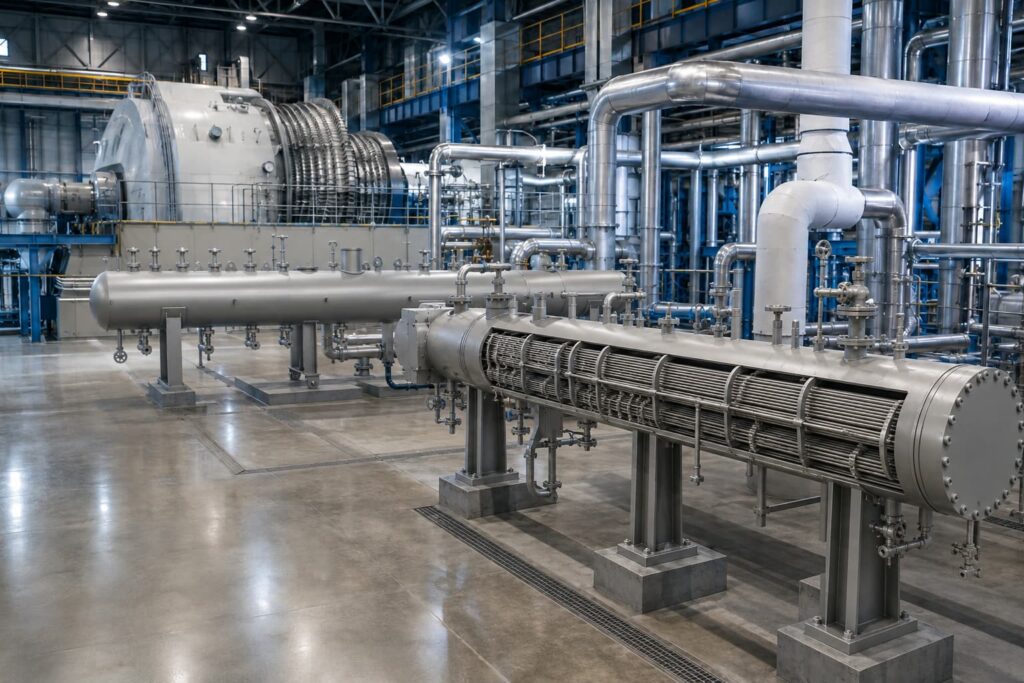
H P Heaters – installed between the boiler feed pump and the boiler/economizer, using high-pressure turbine extraction steam – built for higher Tube-side pressure and temperature duty.
L P Heaters – installed between the condenser and the deaerator, using low-pressure extraction steam – the first stage of feedwater preheating, at lower pressure duty than HP heaters.
Gland Steam Condensers
Recover steam leaking from the turbine’s shaft gland seals and handle the associated non-condensable gases, preventing steam loss to atmosphere while maintaining sealing conditions. Mazda offers two extraction methods:
Gland Vent / Steam Condenser with Blower – uses a motor-driven exhauster to actively draw the air-vapor mixture from the gland condenser, giving consistent extraction independent of ambient conditions.
Gland Vent / Steam Condenser with Ejector & Silencer – vents the non-condensable gas stream through a Ejector and Silencer instead of a powered blower, reducing moving parts, auxiliary power draw, and discharge noise.
Steam Discharge & Bypass Equipment
Support controlled steam discharge and protect plant equipment when the normal steam path is unavailable.
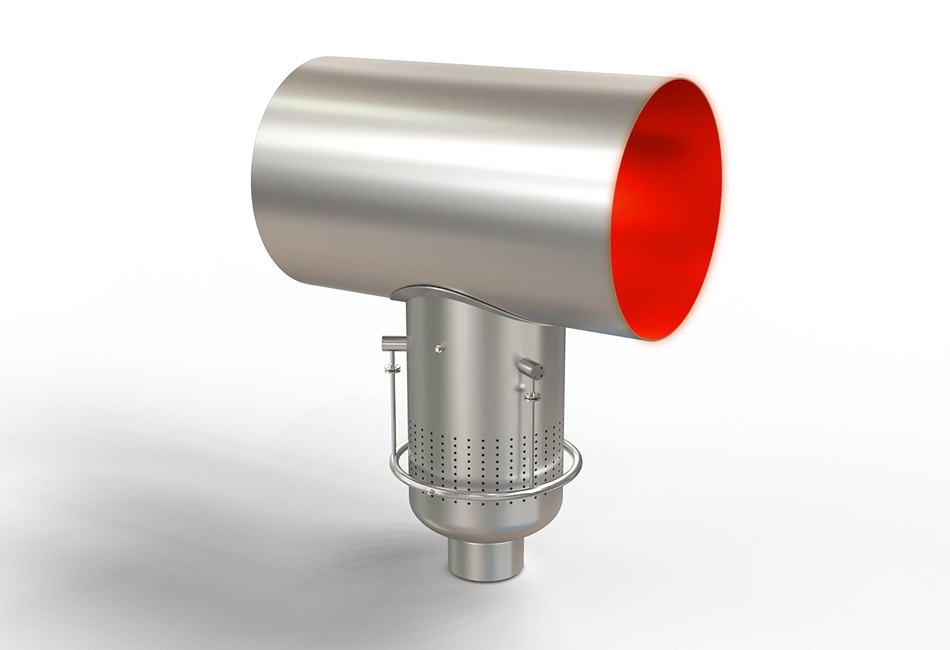
Dump Tubes – desuperheating dump tubes that condition bypassed steam before it enters the condenser, protecting condenser internals from thermal and mechanical shock during a turbine trip. Design depends on steam flow, pressure, temperature, and installation configuration.
How to Select the Right Heat Transfer Equipment for Your Plant?
Selection depends on the process and operating conditions, not the equipment name alone – heat transfer duty, steam and feedwater flow rates, operating pressure and temperature, cooling medium, condensate requirements, materials of construction, and available installation space all factor in, alongside the equipment’s role in the plant’s overall steam and condensate cycle.
Application Requirement
Suggested Equipment
Condensing turbine exhaust steam to maintain vacuum
Condensing System (Surface Condenser Package)
Preheating feedwater with high-pressure extraction steam
H P Heater
Preheating feedwater with low-pressure extraction steam
L P Heater
Recovering turbine gland seal steam, consistent vacuum priority
Gland Steam Condenser with Blower
Recovering turbine gland seal steam, low noise/auxiliary power priority
Gland Steam Condenser with Ejector and Silencer
Protecting boiler/turbine during startup, shutdown, or trip
Dump Condensing System + Dump Tubes
Mazda’s engineering team reviews these parameters as part of the plant’s overall steam cycle before recommending a configuration, rather than offering a fixed, off-the-shelf system.
Applications of Heat Transfer Equipment?
Gland Steam Condensers
converts exhaust or process steam into condensate, maintaining required pressure conditions and enabling condensate recovery
Feedwater Preheating
transfers heat from extracted steam to feedwater, reducing the thermal energy required in later cycle stages
Gland Steam Condensation
handles gland sealing steam and non-condensable gases from turbine shaft seals
Dump Steam Condensation
provides controlled handling of bypassed steam during startup, shutdown, or trip conditions
Steam Discharge
supports controlled steam distribution and flow management through dump tubes and related equipment
Heat Recovery
recovers useful thermal energy from steam and process streams to improve overall plant energy utilization
Industries & Applications
Mazda’s heat transfer equipment is primarily designed for power generation and steam-cycle applications, including:
Power Generation
Steam Turbine Systems
Boiler & Feedwater Systems
Steam & Condensate Systems
Industrial Steam Applications
Why Mazda for Heat Transfer Equipment?
Mazda’s Heat Transfer Division engineers equipment around each plant’s specific steam cycle and operating conditions, backed by ISO 9001, ISO 14001, and ISO 45001 certification, PED compliance, and IBR, ASME, and U-Stamp accreditation across the company. Customers get in-house engineering and after-sales technical assistance for both domestic and export projects, including reference installations for Triveni Turbines.
Frequently Asked Questions
What is heat transfer equipment used for in a power plant?
Heat transfer equipment condenses turbine exhaust steam, preheats boiler feedwater using extraction steam, and recovers steam leaking from turbine gland seals - improving thermal efficiency and reducing fuel and water consumption.
What is the purpose of a condenser in a power plant?
A condenser converts turbine exhaust or process steam into condensate, maintaining the pressure conditions the steam cycle requires and enabling that condensate to be recovered and reused within the plant.
What is the difference between HP and LP heaters?
HP (high-pressure) heaters are installed between the boiler feed pump and the boiler, using high-pressure extraction steam. LP (low-pressure) heaters are installed between the condenser and deaerator, using low-pressure extraction steam. Both preheat feedwater to improve thermal efficiency, but at different points and pressures in the cycle.
What is a gland steam condenser?
A gland steam condenser recovers steam that leaks past the turbine's shaft seals and handles the associated non-condensable gases - condensing the steam for reuse instead of venting it to atmosphere, while maintaining proper sealing conditions.
What is a dump condensing system?
A dump condensing system condenses steam diverted directly from the boiler when the turbine is offline, or during startup, shutdown, or trip conditions - protecting the boiler and turbine while recovering the bypassed steam.
Can heat transfer equipment be customized for an existing plant?
Yes. Mazda's heat transfer equipment is engineered to each plant's steam cycle, operating pressure, and site conditions, including retrofits and replacement of existing condensers or heaters.
Does Mazda manufacture complete condensing systems or individual components?
Both. Mazda supplies complete turnkey condensing packages as well as individual components - Surface Condensers, Ejector System, Condensate Pumps, Gland steam condensers, Control Valve stations, instrumentation and Dump systems.
What is the difference between a Condenser and a Heat exchanger?
A condenser is a type of heat transfer equipment designed primarily to remove heat from a Steam and convert it into a liquid, while a heat exchanger can transfer heat between two fluids without necessarily changing their phase. The appropriate equipment depends on the process and required heat-transfer duty.
What factors affect the performance of heat transfer equipment?
Performance depends on factors such as heat-transfer duty, flow rate, operating pressure and temperature, temperature difference, fluid characteristics, material selection, fouling, pressure drop, and the design of the equipment.
For any inquiries or assistance, our team is ready to offer professional support and guidance. Reach out to us, and we will respond promptly to meet your needs.