Evaporators Division

Products

Mazda's Evaporators Division - Evaporation, Crystallization & Drying Systems

Mazda Limited designs and manufactures industrial evaporation, crystallization, and drying equipment for concentrating, recovering, and recrystallizing process liquids across chemical, pharmaceutical, and food processing applications. Our portfolio includes multi-effect evaporators (MEE), thermal and mechanical vapor recompression evaporators (TVR/MVR), OSLO crystallizers, agitated thin film dryers (ATFD), and solvent stripping units – engineered around each application’s feed characteristics, concentration target, and energy economics rather than supplied as fixed configurations.

Mazda Limited has been engineering and manufacturing process equipment since 1977, with expertise spanning evaporation, vacuum, and heat transfer technologies, and holds ISO 9001, ISO 14001, and ISO 45001 certification along with PED, IBR, ASME, and U-Stamp compliance.

What Is Evaporation & Crystallization Equipment?

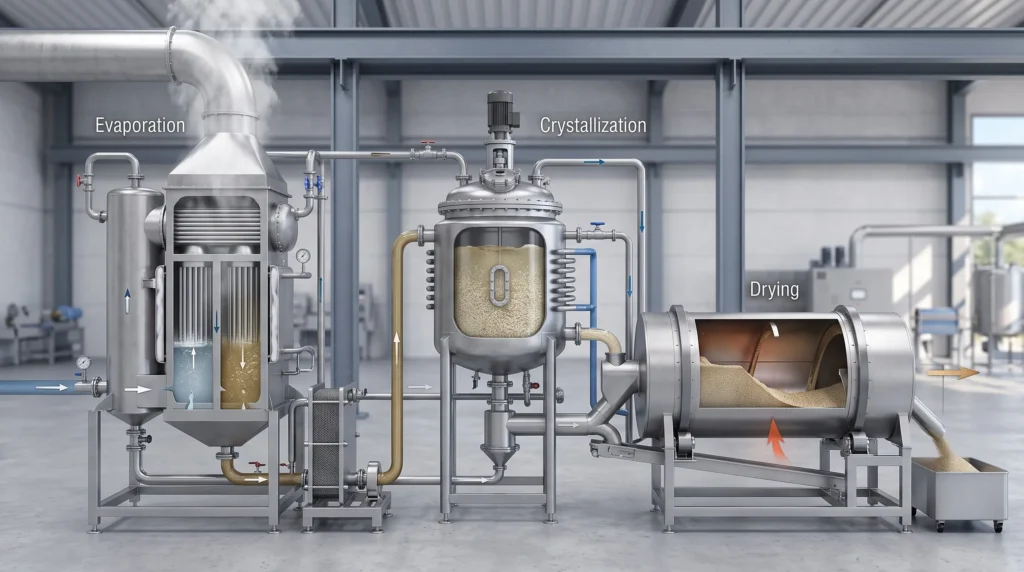
Evaporation equipment concentrates a process liquid by removing solvent — typically water – as vapor, increasing the concentration of dissolved or suspended solids. Crystallization equipment carries this further, cooling or concentrating a solution until dissolved solids form solid crystals that can be separated and recovered. Drying equipment removes the remaining moisture from a concentrated slurry to produce a solid or near-solid product.

What Is Evaporation & Crystallization Equipment?

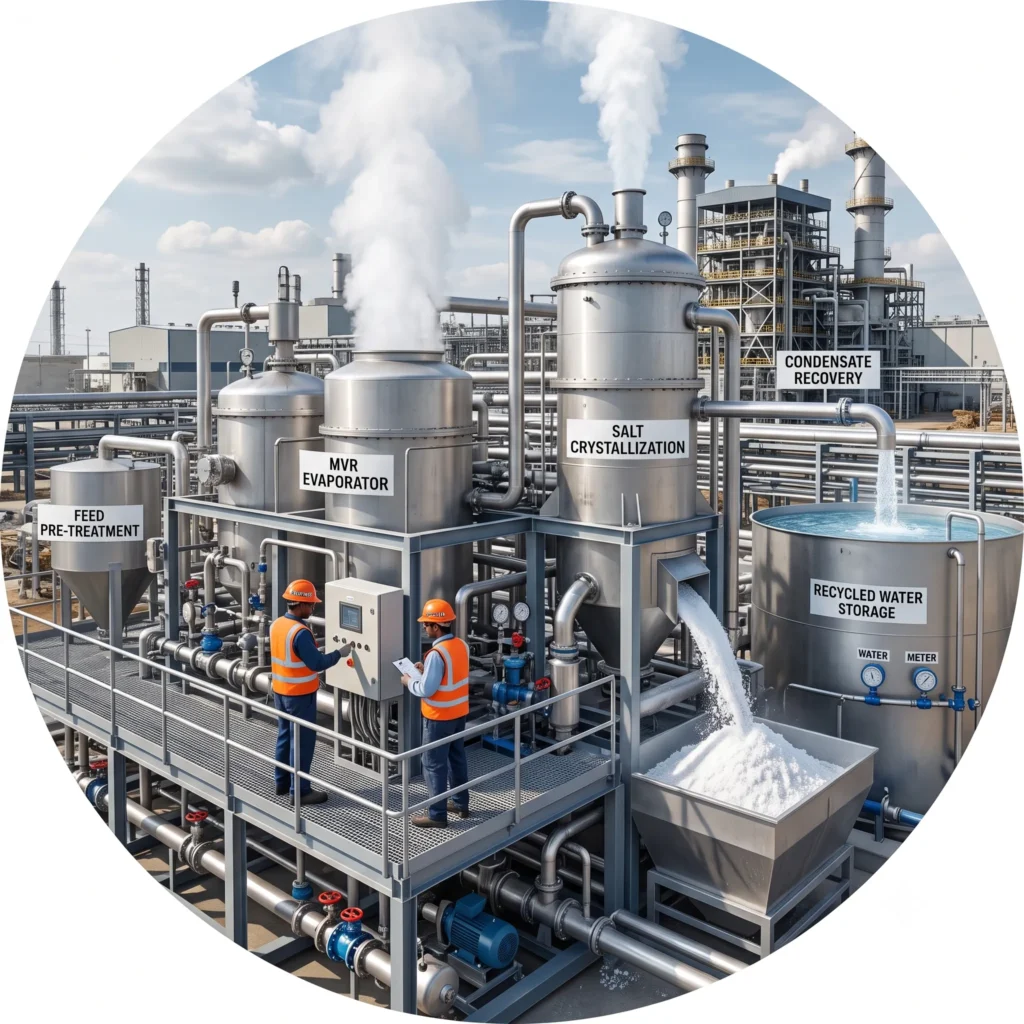
These stages are often used together in a single process train – for example, an MEE or MVR system concentrating a stream, an OSLO crystallizer recovering a crystalline product from it, and an ATFD handling the final high-viscosity residue – particularly in zero liquid discharge (ZLD) systems where no liquid effluent leaves the plant.

Our Evaporation, Crystallization & Drying Range

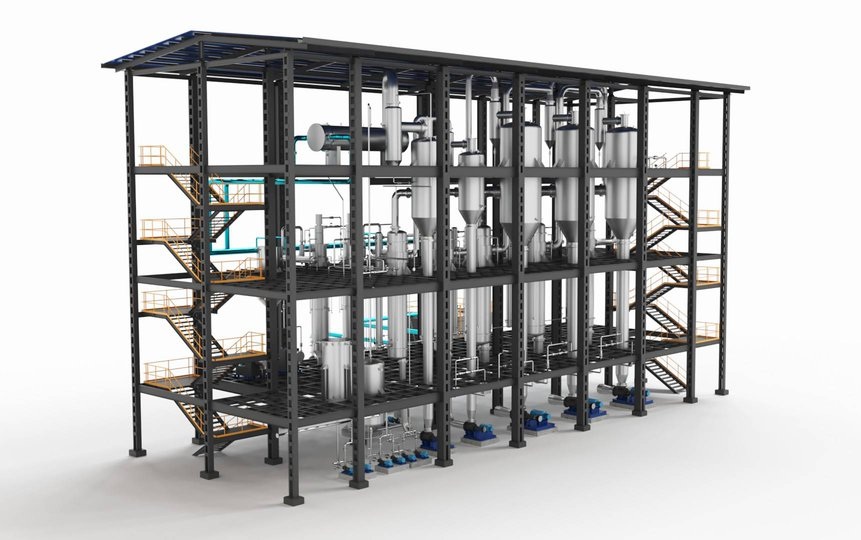
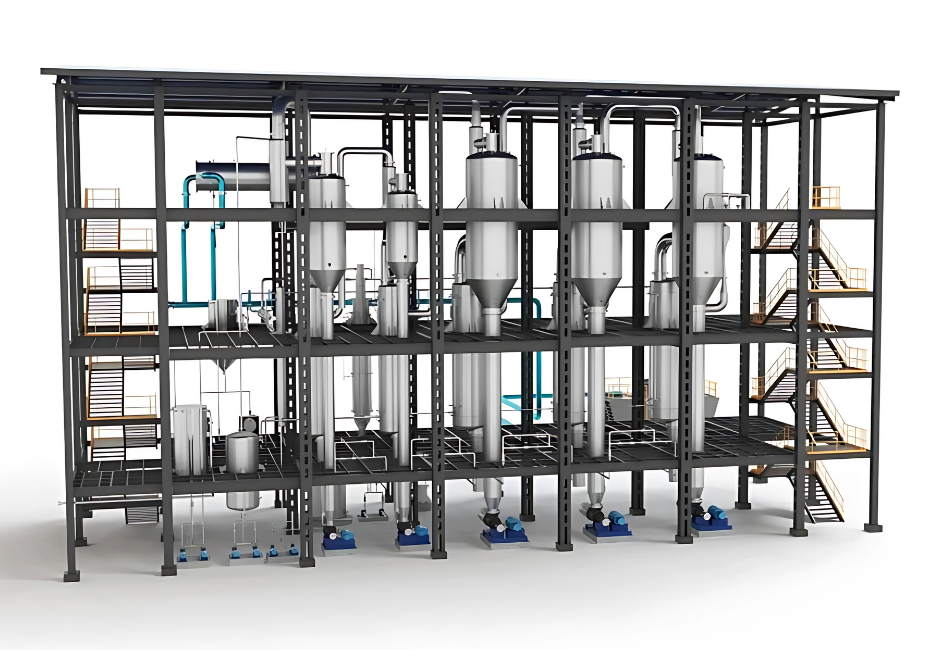
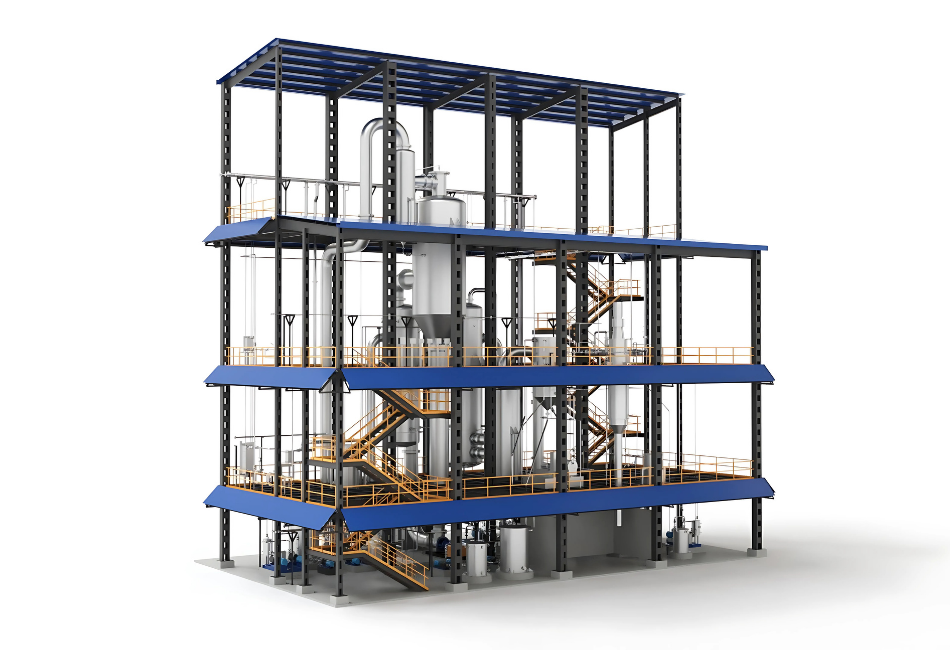
Multi Effect Evaporator (MEE) System

Multi-Effect & Vapor Recompression Evaporators

Concentrate process liquids by evaporating solvent under vacuum across multiple stages, reusing vapor energy between stages to reduce steam consumption. Mazda supplies three configurations, differing in how vapor energy is reused:

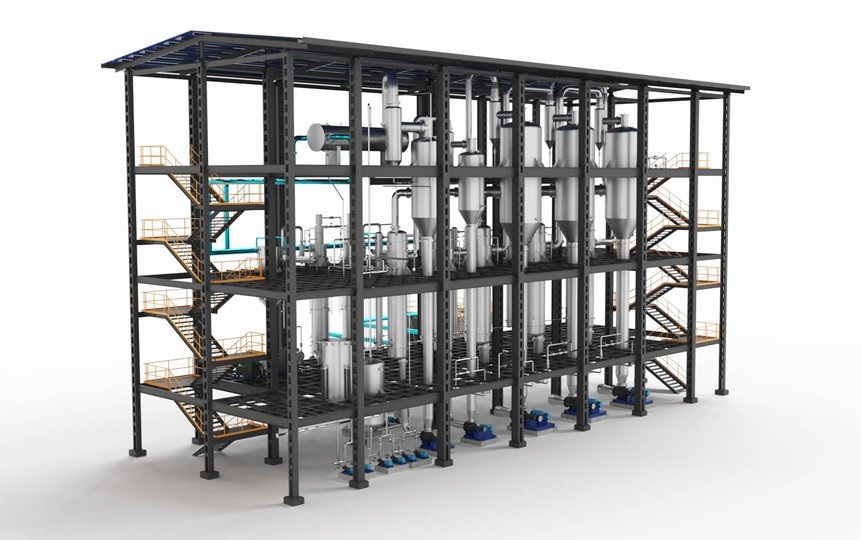
Multi Effect Evaporator (MEE) System – a multi-stage evaporator where vapor from one effect heats the next, reducing overall steam demand versus a single-effect system – a straightforward, widely-used configuration where live steam is readily available.

Thermal Vapor Recompression (TVR) Evaporator System – uses a steam ejector to recompress and reuse vapor from the evaporator, improving steam economy over a plain MEE system without adding rotating equipment.

MVR Based Evaporators System – uses a mechanical vapor compressor instead of motive steam to recompress vapor, minimizing live steam demand – suited to sites where electricity is more cost-effective than steam, and common in zero liquid discharge applications.

OSLO Crystallizer

Crystallization

Recovers a solid crystalline product from a concentrated solution under controlled, continuous conditions.

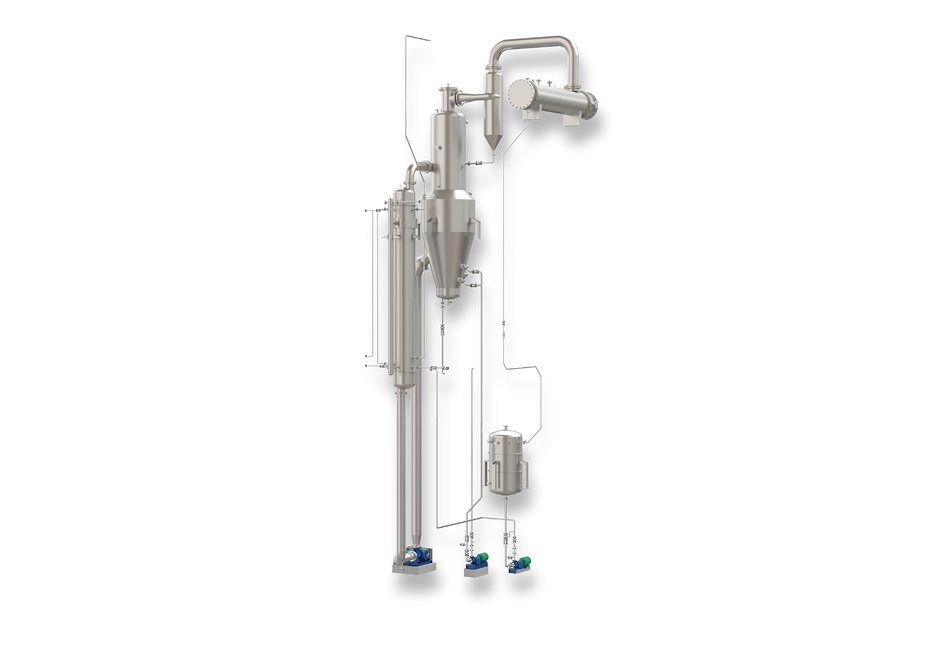
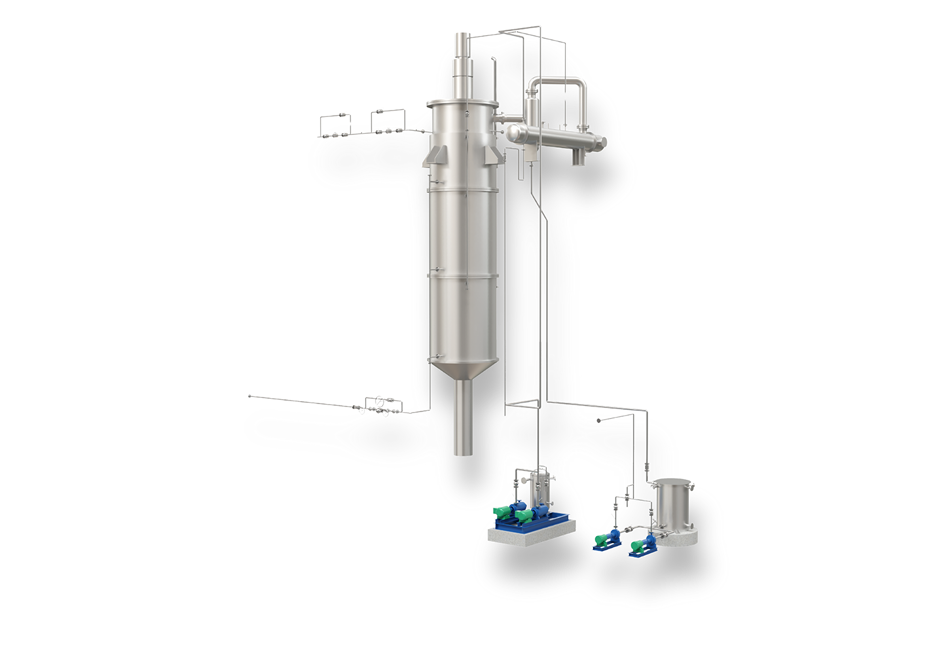
OSLO Crystallizer – a classified suspension crystallizer that produces a more uniform crystal size distribution than simple batch cooling, suited to chemical and pharmaceutical manufacturing.

Agitated Thin Film Dryer (ATFD)

Drying

Removes final moisture from a concentrated or high-viscosity stream to produce a solid or near-solid product.

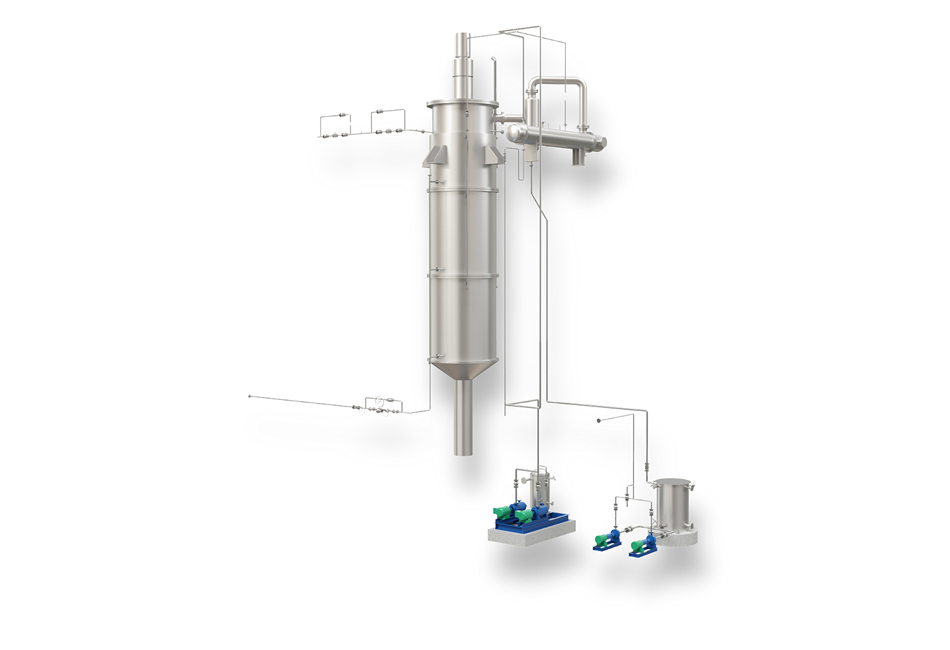
Agitated Thin Film Dryer (ATFD) – handles high-viscosity slurry unsuitable for further evaporation, commonly used as the final concentration stage in zero liquid discharge (ZLD) systems.

Solvent Stripping Unit

Solvent Recovery

Recovers and separates solvent from a process stream for reuse.

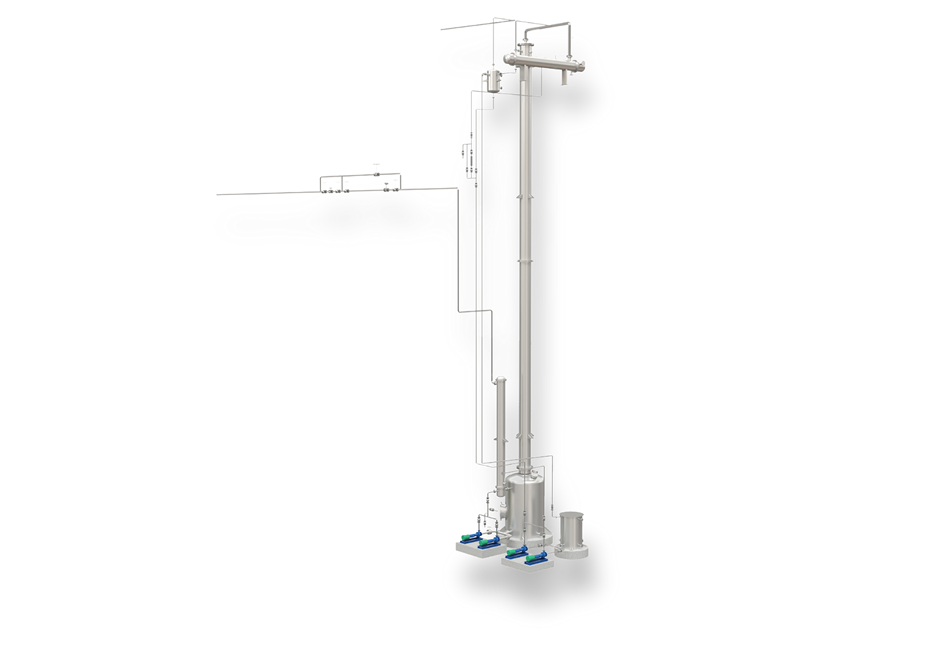
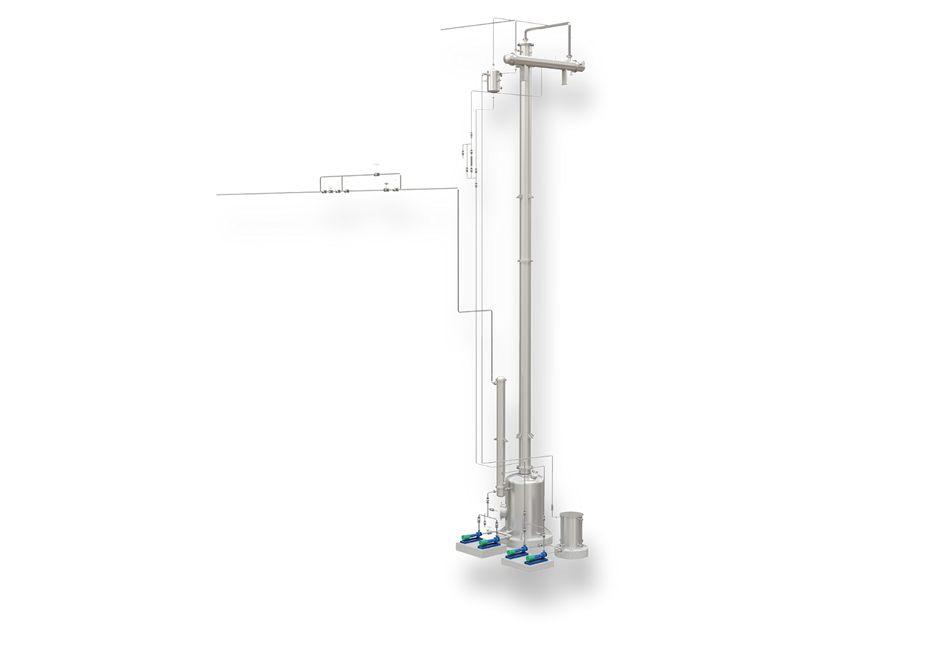
Solvent Stripping Unit – uses steam stripping under vacuum to recover solvent from industrial wastewater and process streams for reuse, reducing both solvent loss and effluent treatment load.

How to Select the Right Evaporation Technology for Your Plant?

Selection depends on feed concentration and viscosity, target end-concentration, available utilities (steam vs. electricity), energy cost, and whether the process needs to end in a crystalline product, a dry solid, or a ZLD-compliant discharge.

Application Requirement Suggested Equipment
Steam available, multi-stage concentration required Multi Effect Evaporator (MEE)
Improving steam economy without adding rotating equipment TVR Evaporator
Electricity more cost-effective than steam; minimal live steam available MVR Evaporator
Recovering a crystalline solid product with uniform particle size OSLO Crystallizer
Concentrating high-viscosity residue as a final ZLD stage Agitated Thin Film Dryer (ATFD)
Recovering solvent from a process or wastewater stream Solvent Stripping Unit

Mazda’s engineering team evaluates feed characteristics and utility economics for each site before recommending a configuration, rather than offering a fixed, off-the-shelf system.

Applications of Evaporation, Crystallization & Drying Equipment

Process Liquid Concentration

reduces solvent content to increase product concentration ahead of further processing

Zero Liquid Discharge (ZLD)

combines evaporation, crystallization, and drying stages so no liquid effluent leaves the plant

Crystalline Product Recovery

recovers solid crystalline products from process solutions under controlled conditions

Solvent Recovery

recovers and reuses process solvents, reducing raw material loss and effluent load

Effluent & Wastewater Treatment

concentrates and reduces the volume of wastewater streams ahead of disposal or further treatment

Industries & Applications

Mazda’s evaporation, crystallization, and drying equipment can support applications across:

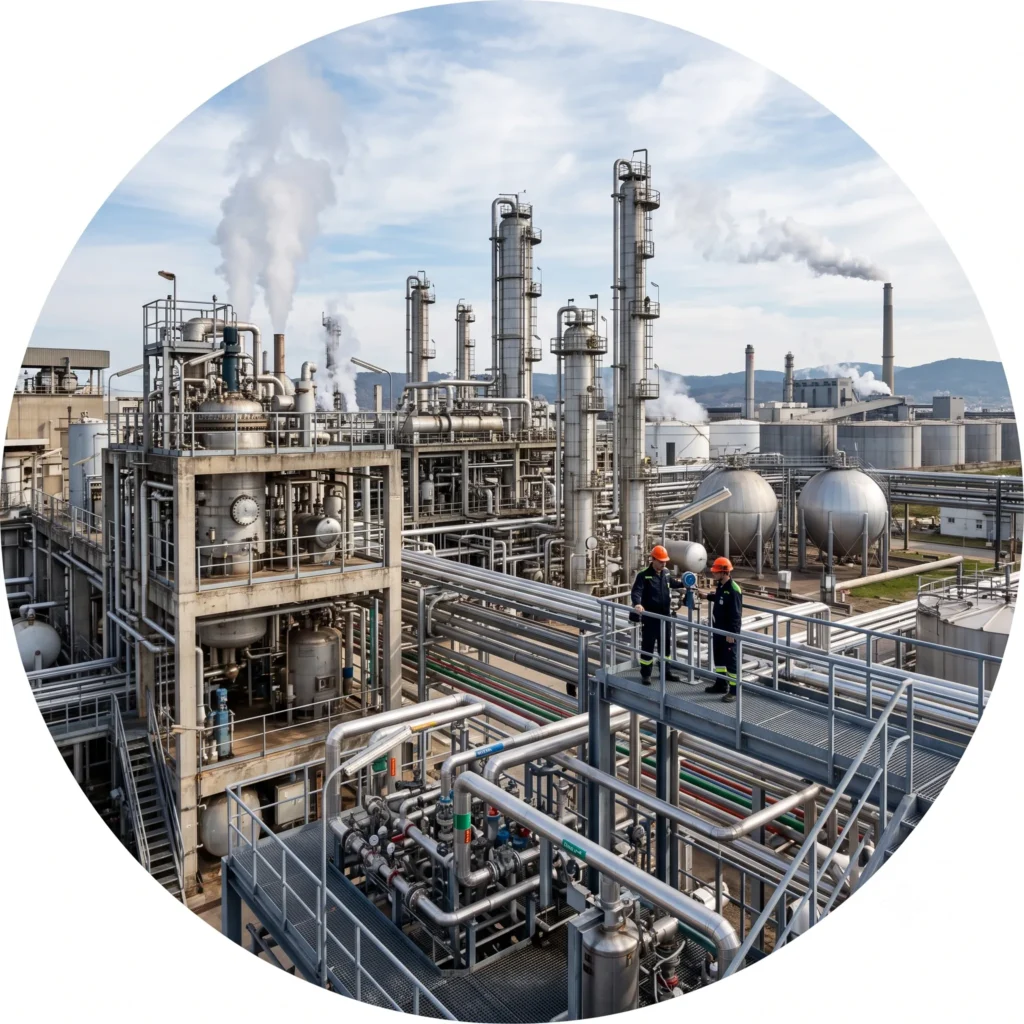
Chemical Processing

Chemical Processing

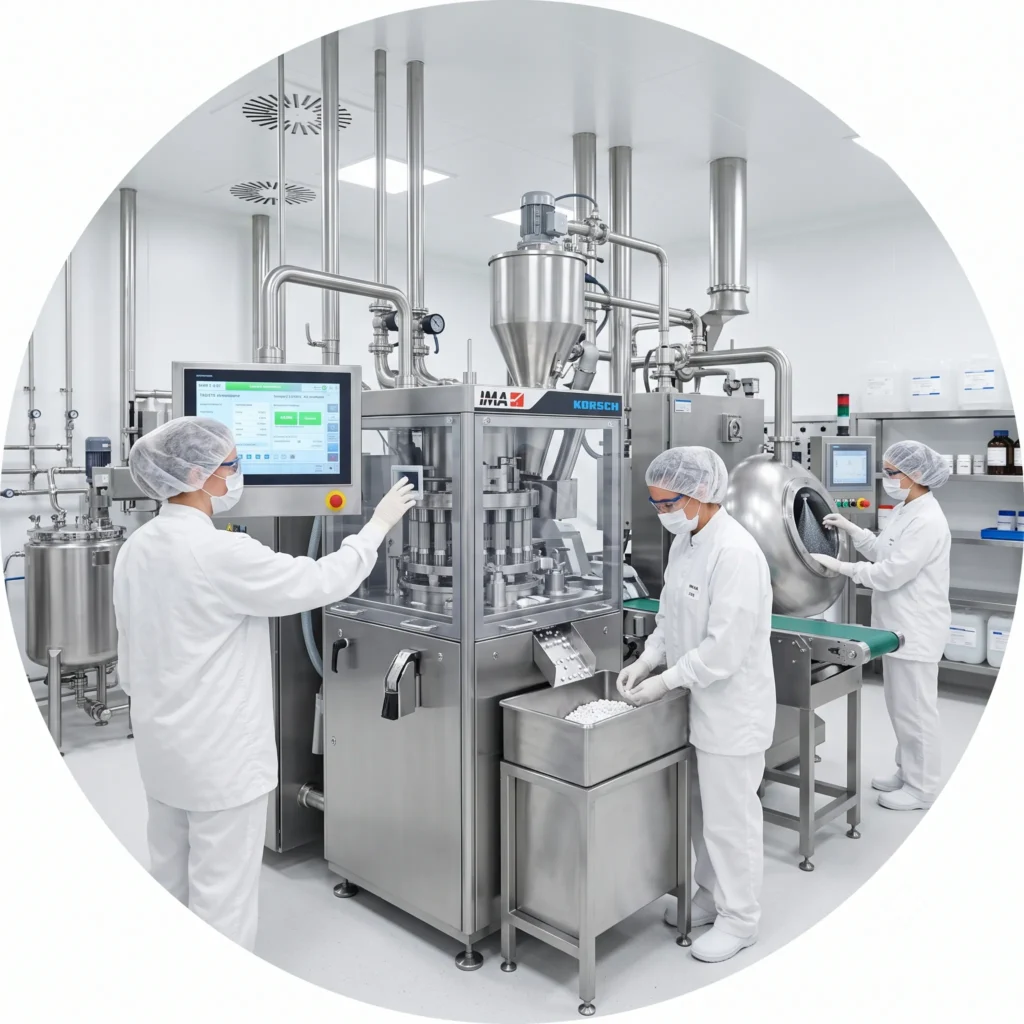
Pharmaceutical Manufacturing

Pharmaceutical Manufacturing

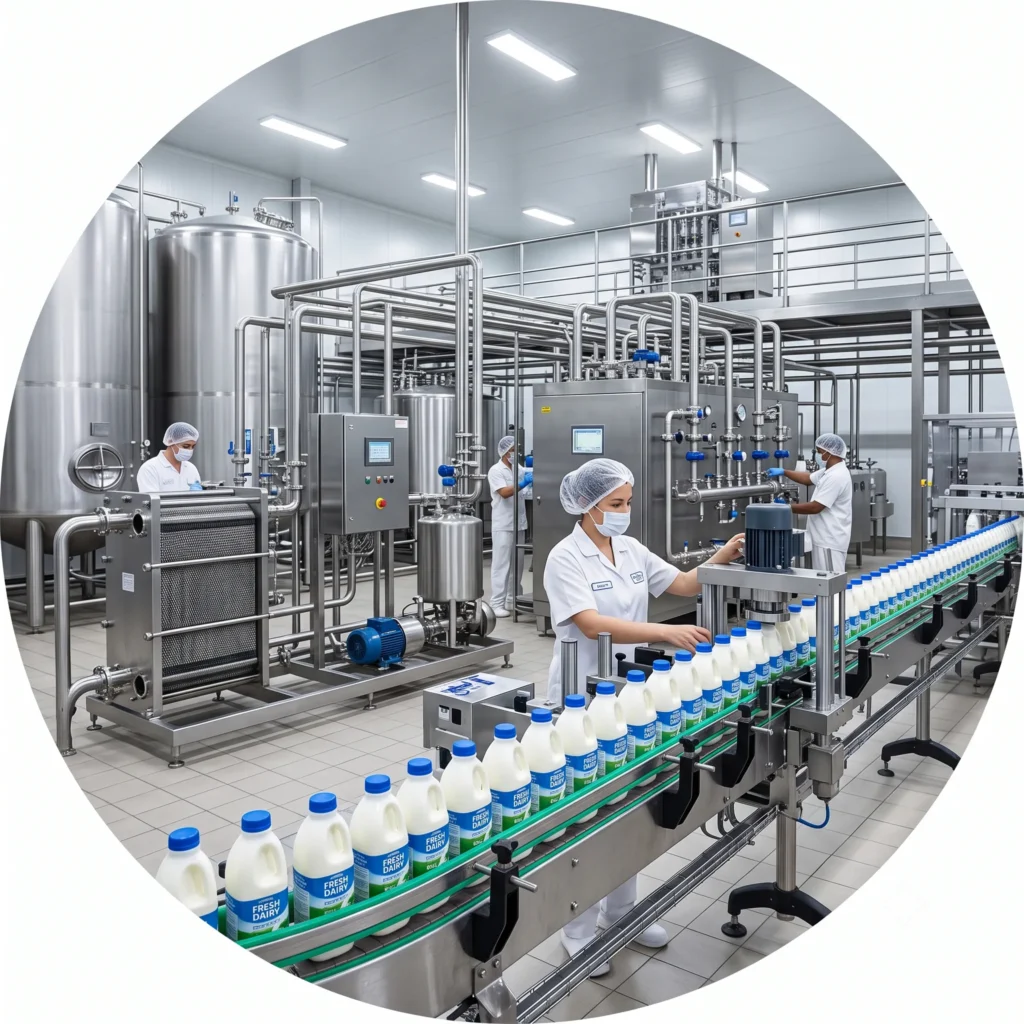
Food & Dairy Processing

Food & Dairy Processing

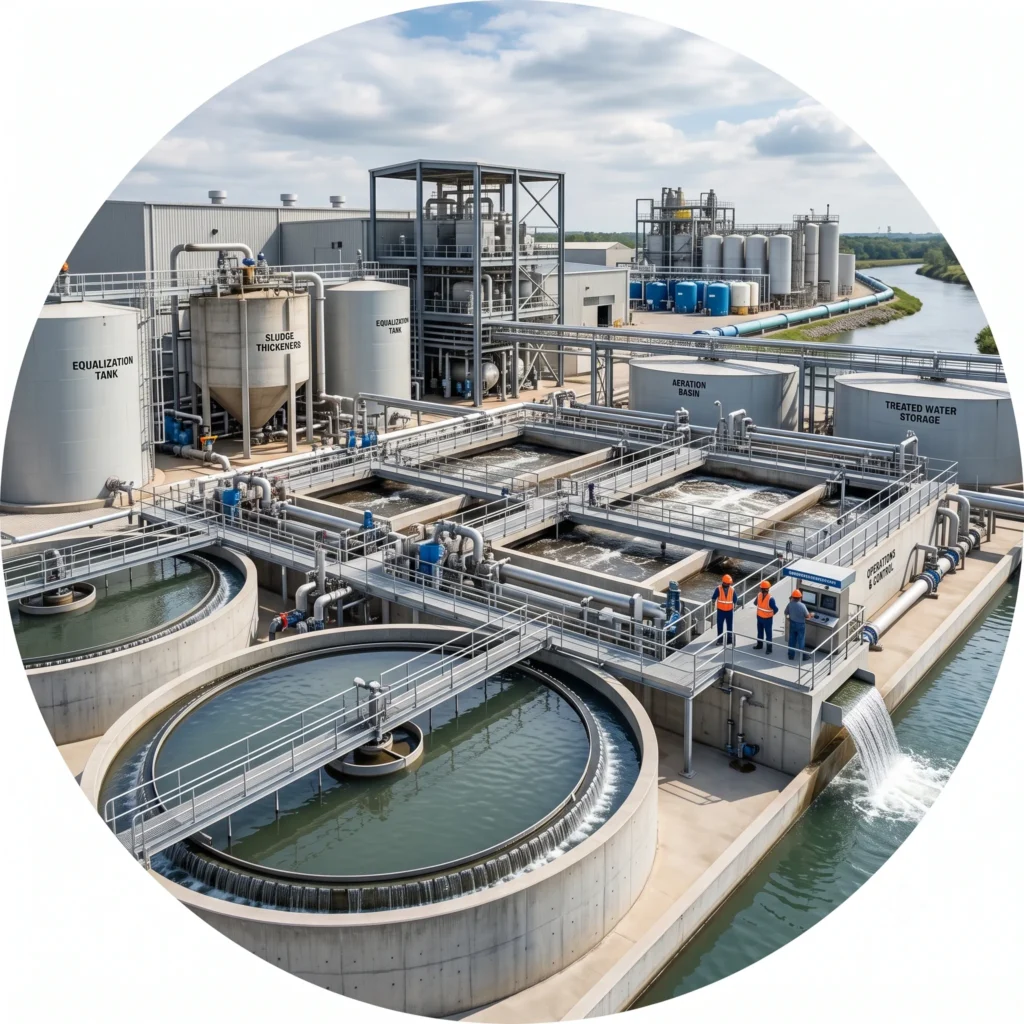
Effluent & Wastewater Treatment

Effluent & Wastewater Treatment

Zero Liquid Discharge (ZLD) Applications

Zero Liquid Discharge (ZLD) Applications

Why Mazda for Evaporation & Crystallization Equipment?

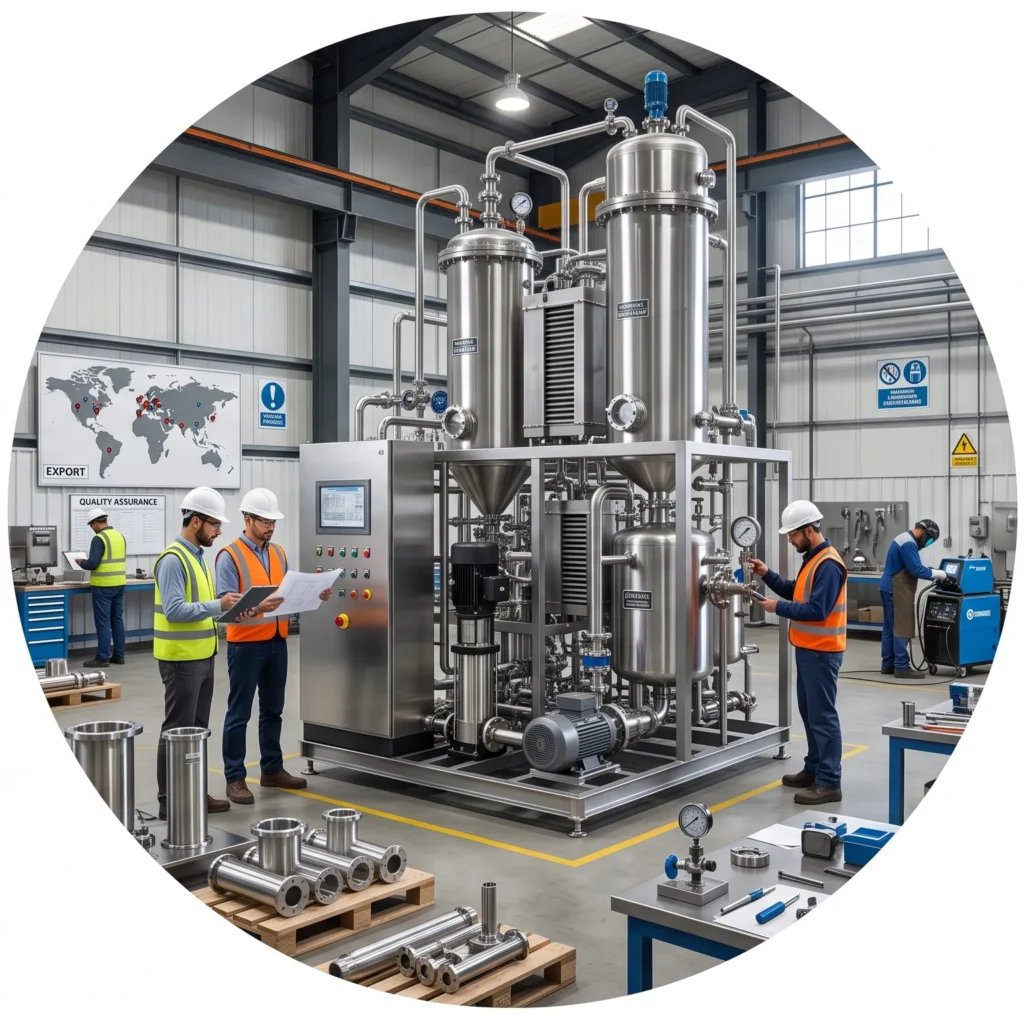
Mazda’s Evaporators Division engineers systems around each application’s feed characteristics and energy economics, backed by ISO 9001, ISO 14001, and ISO 45001 certification, PED compliance, and IBR, ASME, and U-Stamp accreditation across the company. Customers get in-house engineering and after-sales technical assistance for both domestic and export projects.

Why Mazda for Evaporation & Crystallization Equipment?

Frequently Asked Questions

What is a Multi Effect Evaporator (MEE)?

A Multi Effect Evaporator uses multiple evaporation effects in which vapor generated in one effect is reused as the heating medium for another effect. This improves thermal utilization and can reduce fresh steam consumption compared with single-effect evaporation.

What is the difference between an MEE, TVR, and MVR evaporator?

An MEE (multi-effect evaporator) reuses vapor across multiple stages to reduce steam use. A TVR (thermal vapor recompression) system adds a steam ejector to recompress vapor for further steam savings. An MVR (mechanical vapor recompression) system uses a mechanical compressor instead of steam, which can substantially reduce fresh steam requirements in suitable applications. The right technology depends on the specific process conditions, utilities, and energy costs at each site.

What is TVR in an evaporator?

TVR stands for Thermal Vapor Recompression. A TVR evaporator uses a steam ejector or thermo compressor to recompress part of the secondary vapor generated during evaporation, reusing it as heating steam to improve steam economy.

What is MVR evaporation?

MVR stands for Mechanical Vapor Recompression. An MVR system uses a mechanical compressor to recompress secondary vapor and reuse it as heating vapor, which can substantially reduce fresh steam requirements in suitable applications.

How do you select an industrial evaporator?

Selection depends on feed composition, flow rate, viscosity, required evaporation capacity, initial and final concentration, temperature sensitivity, available steam or electricity, vacuum requirements, fouling characteristics, and the desired final product. These factors determine whether MEE, TVR, MVR, crystallization, drying, or a combination of technologies is appropriate.
What is a zero liquid discharge (ZLD) system?

A ZLD system treats wastewater so that no liquid effluent leaves the plant — typically combining evaporation (MEE/MVR), crystallization, and a final drying stage such as an ATFD to recover both water for reuse and solid residue for disposal or sale.

What does an agitated thin film dryer (ATFD) do?

An ATFD removes final moisture from a high-viscosity slurry that's too concentrated for further evaporation, producing a dry or near-dry solid - commonly the final stage in a zero liquid discharge process.

What is an OSLO crystallizer?

An OSLO crystallizer is a classified suspension crystallizer that produces a more uniform crystal size than simple batch cooling, used to recover crystalline products from concentrated solutions in chemical and pharmaceutical manufacturing.

How does a solvent stripping unit work?

A solvent stripping unit uses steam stripping under vacuum to separate and recover solvent from a process or wastewater stream, allowing the solvent to be reused and reducing the effluent treatment load.

Can evaporation systems be customized for an existing plant?

Yes. Mazda's evaporation, crystallization, and drying equipment is engineered to each application's feed characteristics, concentration targets, and available utilities, including retrofits and capacity expansions.

Does Mazda manufacture complete evaporation systems or individual components?

Both. Mazda supplies complete evaporation trains - combining MEE/TVR/MVR evaporators, crystallizers, and dryers - as well as individual equipment for existing installations.

<< 1 >>


Explore Mazda's Evaporation & Crystallization Equipment

Explore our range of evaporation, crystallization, and drying equipment to find the technology suited to your process.

For any inquiries or assistance, our team is ready to offer professional support and guidance. Reach out to us, and we will respond promptly to meet your needs.

Request a Demo – Share Your Info