


Read Our Article
Vacuum Pump Manufacturer in India: Types of Industrial Vacuum Pumps & Systems

An HP (High Pressure) heater is installed between the boiler feed pump and the boiler, using high-pressure turbine extraction steam to preheat feedwater. An LP (Low Pressure) heater is installed between the condenser and the deaerator, an earlier stage in the cycle, using lower-pressure extraction steam. Both preheat feedwater to reduce boiler fuel demand, but they are engineered for different pressure duties and are generally not interchangeable. Most plants use a staged train of both HP and LP heaters together.
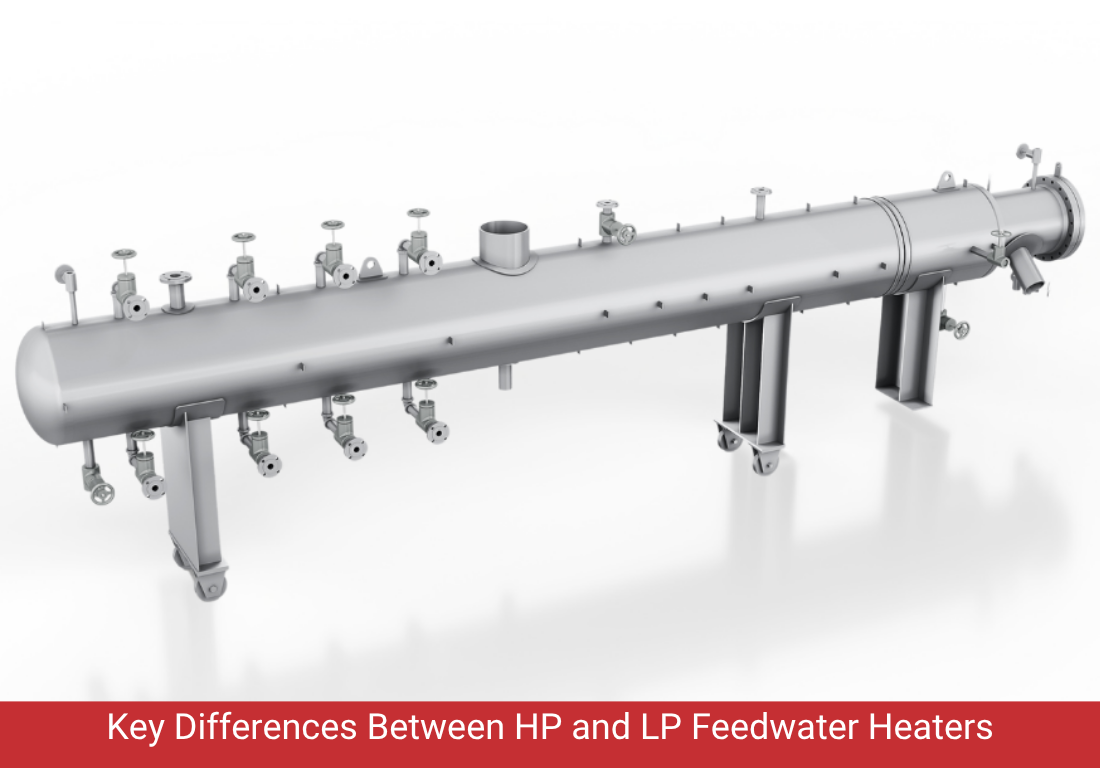
Understanding the Role of High Pressure and Low Pressure Feedwater Heaters in a Power Plant’s Steam Cycle
Feedwater heaters are a standard part of a power plant’s steam-water cycle, used to preheat boiler feedwater with steam extracted from the turbine before that feedwater reaches the boiler. Most plants use two categories of feedwater heater — High Pressure (HP) heaters and Low Pressure (LP) heaters — positioned at different points in the feedwater train. Although both serve the same general purpose, they operate under different pressure conditions and occupy different positions in the cycle.
Mazda Limited, a heat transfer equipment manufacturer based in Ahmedabad, India, since 1977, supplies both HP and LP heaters as part of its heat transfer equipment range. This article explains where each sits in the feedwater cycle, how they differ, and why the distinction matters for plant efficiency.
A High Pressure (HP) Heater is installed between the boiler feed pump and the boiler (or economizer), on the high-pressure side of the feedwater cycle. It uses high-pressure steam extracted from an earlier stage of the turbine to preheat feedwater that has already been pressurized by the boiler feed pump.
Because HP heaters operate downstream of the feed pump, they’re designed to withstand higher shell-side and tube-side pressures and temperatures than LP heaters, which affects their construction, material selection, and mechanical design.
A Low Pressure Feed Water Heater is installed between the condenser and the deaerator, on the low-pressure side of the feedwater cycle — an earlier stage than the HP heater. It uses lower-pressure steam extracted from a later stage of the turbine to begin preheating feedwater before it reaches the deaerator and, eventually, the boiler feed pump.
Because they operate at lower pressure and temperature than HP heaters, LP heaters are generally subject to less demanding mechanical design requirements, though they still need to be engineered for reliable long-term operation within a continuously running steam cycle.
| Factor | HP Heater | LP Heater |
|---|---|---|
| Position in the feedwater cycle | Between boiler feed pump and boiler/economizer | Between condenser and deaerator |
| Extraction steam pressure | Higher-pressure turbine extraction | Lower-pressure turbine extraction |
| Typical stage in the cycle | Later stage — feedwater already pressurized | Earlier stage — before the deaerator |
| Design pressure/temperature duty | Higher | Lower |
| Shared purpose | Preheats feedwater to reduce boiler fuel demand | Preheats feedwater to reduce boiler fuel demand |
Both HP and LP heaters exist to do the same job — recover heat from turbine extraction steam and use it to preheat feedwater, reducing the fuel the boiler needs to burn to bring that water up to steam temperature. The difference lies in where each sits in the cycle and the pressure conditions each is built to handle.
A power plant’s feedwater heating system is typically designed as a train of several heaters — a combination of LP and HP heaters — each recovering heat from a different turbine extraction point. This staged approach allows the plant to recover thermal energy progressively as feedwater moves through the cycle, rather than relying on a single heater to do all the preheating in one step.
Because HP and LP heaters are engineered for different pressure duties, they generally can’t be substituted for each other within a plant’s design — an HP heater used in an LP position, or vice versa, would not be properly matched to the extraction steam conditions at that point in the cycle. Understanding which type is needed at each stage is part of correctly specifying a plant’s feedwater heating system.
If an HP or LP heater is bypassed, fouled, or otherwise underperforming, the feedwater entering the boiler arrives at a lower temperature than the cycle was designed for. The boiler then needs to supply more fuel energy to bring that water up to steam temperature, which reduces the plant’s overall thermal efficiency. Over time, this can also increase thermal stress on boiler components that weren’t designed for larger temperature swings.
Because feedwater heaters operate continuously as part of the plant’s normal cycle, their condition is generally monitored as part of routine plant performance tracking, alongside other steam-cycle equipment such as condensers and deaerators.
Our Other Product
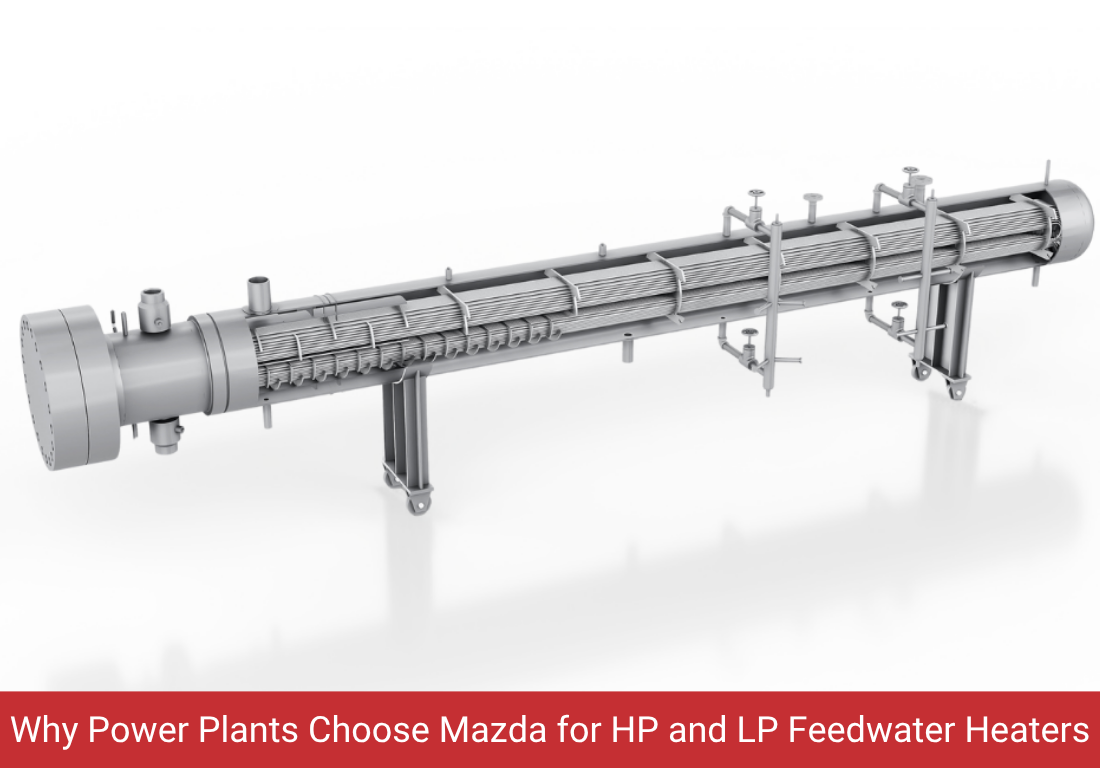
Both HP and LP heaters are shell-and-tube style heat exchangers, and their maintenance considerations are broadly similar — tube-side and shell-side fouling, potential tube leaks, and periodic inspection of pressure-retaining components. Because HP heaters operate at higher pressures and temperatures, their mechanical design and inspection intervals are generally more demanding than those of LP heaters, reflecting the more severe duty they’re built for.
The number, type, and rating of feedwater heaters required for a given plant depend on factors specific to that plant’s steam cycle:
Mazda Limited, established in 1977 and headquartered in Ahmedabad, India, is an engineering and manufacturing company specializing in industrial process equipment. Its capabilities extend across vacuum systems, heat transfer equipment, evaporation and crystallization, air pollution control, and non-chemical water treatment.
Mazda operates with certifications including ISO 9001, ISO 14001, and ISO 45001, along with relevant PED, IBR, ASME, and U-Stamp credentials across its engineering and manufacturing operations. The company develops equipment for domestic and international customers and focuses on application-specific engineering, manufacturing quality, and long-term technical support.
HP and LP heaters both preheat boiler feedwater using turbine extraction steam, but they occupy different positions in a power plant’s feedwater cycle and are engineered for different pressure duties — HP heaters between the feed pump and boiler, LP heaters between the condenser and deaerator. Together, they form a staged feedwater heating system that supports the plant’s overall thermal efficiency.
Looking for HP or LP heaters for a new installation or replacement project? Contact Mazda Limited to discuss your plant’s feedwater cycle and identify the right heater specification for your application.
An HP heater is installed between the boiler feed pump and the boiler, using high-pressure extraction steam. An LP heater is installed between the condenser and deaerator, using lower-pressure extraction steam. Both preheat feedwater, but at different points and pressures in the cycle.
Generally no. HP and LP heaters are engineered for different pressure and temperature duties matched to their specific position in the feedwater cycle, so they are not typically interchangeable.
Using a staged train of LP and HP heaters allows a plant to progressively recover heat from multiple turbine extraction points, improving overall thermal efficiency more than a single heater could achieve alone.
Bypassing a feedwater heater generally reduces the plant's overall thermal efficiency, since less heat is being recovered from extraction steam before the feedwater reaches the boiler. The specific impact depends on the plant's overall cycle design.
Rating is based on the turbine's extraction steam conditions at that point in the cycle, the required feedwater flow and outlet temperature, and the plant's overall efficiency targets. This typically requires a detailed engineering evaluation of the steam cycle.
Yes. Mazda Limited can engineer HP and LP heaters for both new installations and the replacement of existing feedwater heaters, based on the plant's specific cycle conditions.
Yes. Mazda Limited manufactures both HP and LP heaters as part of its heat transfer equipment range, engineered to match each heater's specific position and pressure duty within a plant's feedwater cycle.
The boiler needs to supply more fuel energy to bring underheated feedwater up to steam temperature, reducing overall plant thermal efficiency and potentially increasing thermal stress on boiler components over time.
Both are shell-and-tube style heat exchangers with broadly similar maintenance considerations, though HP heaters generally have more demanding inspection intervals given their higher pressure and temperature duty.




Our team is available to provide professional support and will respond promptly to any inquiries or assistance you need.