


Quick Read
- A packed tower scrubber is an air pollution control device that removes pollutants and process gases from a gas stream by bringing it into close contact with a scrubbing liquid.
- It works on a countercurrent principle: gas flows upward through a packed bed while scrubbing liquid flows downward over the packing.
- A mist eliminator at the top ensures clean gas discharge.
- Systems can run on a once-through or recycle basis, depending on the design.
- Packing type, liquid chemistry, materials of construction and operating conditions are tailored to each application.
Introduction
Industrial processes often release gases that must be treated before they are discharged to the atmosphere. Some processes also need specific gases removed or absorbed as part of production. In both cases, the gas stream has to be cleaned reliably and economically.
A packed tower scrubber is one of the most widely used devices for this purpose. It brings gas and scrubbing liquid into close contact across a large surface area, allowing pollutants or process gases to be absorbed into the liquid.
This guide explains what a packed tower scrubber is, how it works, its main components, the design factors that affect performance, and its advantages as a pollution control device.
What Is a Packed Tower Scrubber?
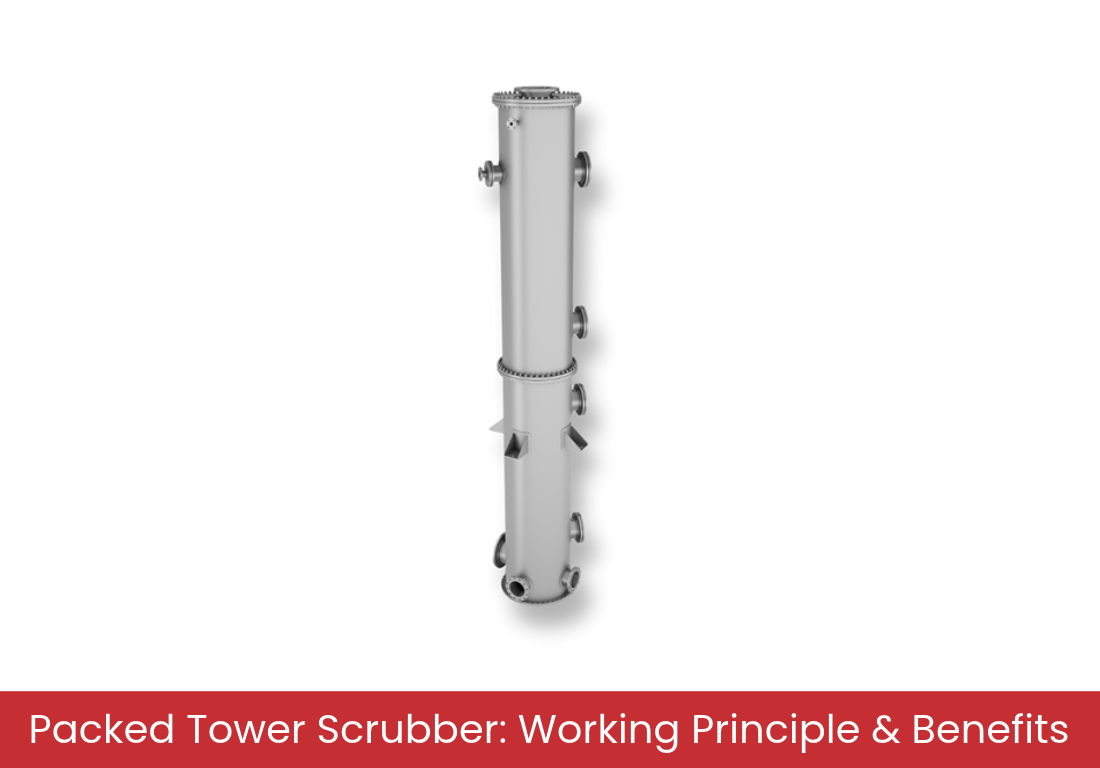
A packed tower scrubber is a vertical tower filled with packing material through which a gas stream and a scrubbing liquid pass in opposite directions. The packing provides a large surface area over which the liquid spreads, so the rising gas comes into thorough contact with it.
As the gas moves through the packed bed, pollutants or process gases are absorbed into the scrubbing liquid. The cleaned gas leaves from the top of the tower, while the liquid collects at the bottom to be recycled or drained.
Packed tower scrubbers serve two main purposes:
- Air pollution control: removing pollutants from exhaust gases before discharge
- Process applications: absorbing specific process gases as part of an industrial operation
How Does a Packed Tower Scrubber Work?
A packed tower scrubber operates on the countercurrent gas scrubbing principle. Here is how the process works, step by step.
Step 1: Gas Enters at the Bottom
The gas stream to be treated enters the tower near the bottom and begins rising upward through the tower.
Step 2: Scrubbing Liquid Is Distributed from the Top
At the same time, scrubbing liquid is distributed across the top of the tower and flows downward over the packing.
Step 3: Gas and Liquid Make Close Contact
As the gas rises and the liquid flows down, the two phases meet across the large surface area of the packing. This close contact enables efficient removal of pollutants or process gases from the gas stream into the liquid.
Step 4: The Mist Eliminator Cleans the Exiting Gas
Before the gas leaves the tower, it passes through a mist eliminator. This ensures a clean gas discharge from the top of the tower.
Step 5: The Liquid Is Recycled or Drained
The scrubbing liquid collects at the bottom of the tower. Depending on the system design, it is either recycled back to the top of the tower or drained.
Main Components of a Packed Tower Scrubber
Gas Inlet
Located near the bottom of the tower, the gas inlet introduces the gas stream to be treated.
Liquid Distribution System
At the top of the tower, the liquid distribution system spreads the scrubbing liquid over the packing so it flows downward through the bed.
Packed Bed
The packed bed is the core of the scrubber. Its packing material provides a large surface area for gas and liquid to make contact. The packing type is selected to suit the process conditions.
Mist Eliminator
Positioned near the top of the tower, the mist eliminator ensures the gas leaving the scrubber is clean.
Gas Outlet
The treated gas exits from the top of the tower.
Liquid Outlet or Recirculation
The scrubbing liquid leaves from the bottom of the tower. It is either drained (once-through operation) or recirculated back to the top (recycle operation).
Why the Countercurrent Design Matters
In a countercurrent design, gas and liquid move in opposite directions throughout the height of the tower. The rising gas keeps meeting liquid as it travels up through the packed bed, giving the two phases thorough and continuous contact.
This is why the countercurrent arrangement is a proven design for achieving maximum absorption efficiency in packed tower scrubbers.
Once-Through vs. Recycle Operation
Packed tower scrubbers offer flexible operation in one of two modes.
| Operating Mode | How It Works |
|---|---|
| Once-through | Scrubbing liquid passes through the tower once and is then drained. |
| Recycle | Scrubbing liquid is collected at the bottom and recirculated to the top of the tower. |
The choice between the two depends on the system design, the liquid chemistry and the requirements of the application.
Key Design Factors for a Packed Tower Scrubber
Packed tower scrubbers are not one-size-fits-all. Each tower should be engineered around the exact needs of the process.
- Packing type: Different packing types suit different process conditions. The right packing provides a large surface area for scrubbing while keeping pressure drop low.
- Liquid chemistry: The scrubbing liquid must be selected to suit the pollutants or process gases being removed.
- Operating conditions: Gas flow, temperature and other process conditions influence the tower’s design.
- Materials of construction: The right materials provide corrosion resistance while keeping costs under control.
- Operating mode: Once-through or recycle operation is chosen to suit the system design.
- Scale: Towers can be designed for anything from small-scale applications to large industrial installations.
Advantages of Packed Tower Scrubbers
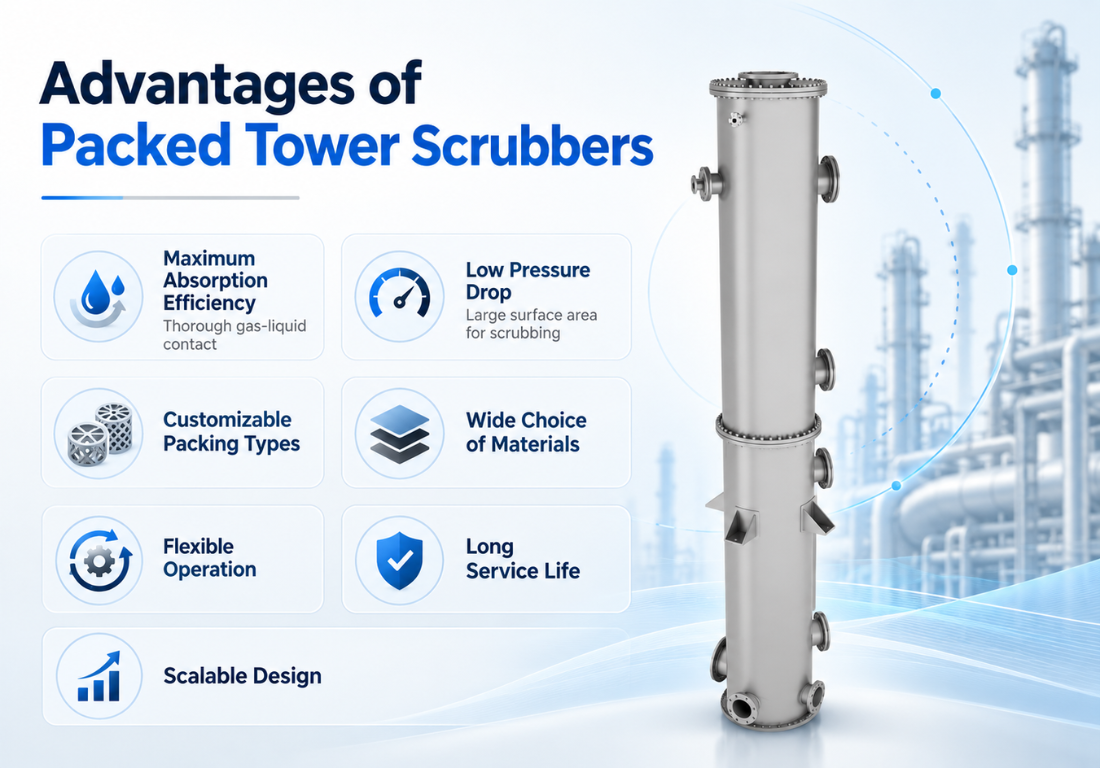
Maximum Absorption Efficiency
The proven countercurrent design gives gas and liquid thorough contact, delivering highly efficient absorption.
Low Pressure Drop with a Large Surface Area
Packing provides a large surface area for effective scrubbing while maintaining a low pressure drop through the tower.
Customizable Packing Types
Packing can be selected to match varied process conditions, so performance is tailored to each application.
Wide Choice of Materials of Construction
A broad range of materials allows the tower to resist corrosion while optimizing cost.
Flexible Operation
Towers can operate as once-through or recycle systems, depending on process needs.
Long Service Life
Robust construction supports dependable, long-term performance across applications.
Scalable Design
Packed towers can be engineered for both small-scale and large industrial installations.
Applications of Packed Tower Scrubbers
Air Pollution Control
As a pollution control device, a packed tower scrubber removes pollutants from industrial exhaust gases so cleaner gas is discharged to the atmosphere.
Specialized Process Applications
Packed towers are also used within industrial processes where specific gases must be absorbed or removed as part of production.
Small to Large Installations
Because each tower is custom-engineered, packed tower scrubbers suit everything from small-scale applications to large industrial installations across a wide range of industries.
How to Select the Right Packed Tower Scrubber
To engineer a packed tower that meets your requirements, the following information is needed:
- Composition of the gas stream and the pollutants or process gases to be removed
- Gas flow rate and operating conditions
- Preferred or required scrubbing liquid
- Corrosion risks and any material preferences
- Whether once-through or recycle operation suits your site
- The scale of the installation
The right scrubber is one designed around these specific conditions, not a standard configuration.
Packed Tower Scrubbers from Mazda Limited
At Mazda Limited, we design and manufacture Packed Tower Scrubbers for highly efficient countercurrent gas scrubbing in air pollution control and specialized process applications.
Every tower we build is custom-designed and engineered to meet exact process needs. We optimize each one for packing type, liquid chemistry and operating conditions to deliver long-term reliability and cost efficiency. From small-scale applications to large industrial installations, our packed towers are trusted for their robust construction, consistent performance and adaptability across industries.
Key Advantages of Our Packed Tower Scrubbers
- Proven countercurrent design for maximum absorption efficiency
- Customizable packing types to match varied process conditions
- Wide range of materials of construction for corrosion resistance and cost optimization
- Low pressure drop with a large surface area for effective scrubbing
- Flexible operation with once-through or recycle systems
- Long service life and dependable performance across applications
Our air pollution control range also includes the Jet Venturi Fume Scrubber for industrial gas-treatment applications.
To help us design the right tower, share your gas composition, flow rate, operating conditions and preferred mode of operation.
Frequently Asked Questions (FAQs)
What is a packed tower scrubber?
A packed tower scrubber is an air pollution control device that removes pollutants or process gases from a gas stream. Gas rises through a packed bed while scrubbing liquid flows downward, and the close contact between them allows the gases to be absorbed into the liquid.
How does a packed tower scrubber work?
Gas enters at the bottom of the tower and rises through the packing, while scrubbing liquid is distributed from the top and flows downward. Their close contact removes pollutants or process gases. A mist eliminator ensures clean gas discharge, and the liquid is recycled or drained.
Why is a packed tower scrubber called a countercurrent scrubber?
It is called countercurrent because the gas and scrubbing liquid flow in opposite directions: gas upward and liquid downward. This gives thorough contact between the two phases for maximum absorption efficiency.
What is the purpose of packing in a scrubber tower?
Packing provides a large surface area over which the scrubbing liquid spreads, so the rising gas makes close contact with it. Packing types can be selected to match varied process conditions while maintaining a low pressure drop.
What does a mist eliminator do in a packed tower scrubber?
The mist eliminator sits near the top of the tower and ensures that the gas leaving the scrubber is clean before it is discharged.
What is the difference between once-through and recycle operation?
In once-through operation, the scrubbing liquid passes through the tower once and is drained. In recycle operation, it is collected at the bottom and recirculated to the top. The choice depends on the system design and application.
What materials are packed tower scrubbers made from?
Packed tower scrubbers can be built from a wide range of materials of construction. Materials are selected for corrosion resistance and cost optimization based on the gases and liquids involved.
Where are packed tower scrubbers used?
They are used for air pollution control and in specialized process applications where gases must be absorbed or removed. They can be designed for both small-scale and large industrial installations.
Conclusion
A packed tower scrubber is a reliable, efficient pollution control device that uses countercurrent flow and a packed bed to bring gas and scrubbing liquid into close contact. With the right packing type, liquid chemistry, materials and operating mode, it delivers high absorption efficiency, low pressure drop and long service life.
We engineer every packed tower around the exact needs of the process, giving plants a scrubbing solution built for performance, durability and economy.