


Read Our Article
Vacuum Pump Manufacturer in India: Types of Industrial Vacuum Pumps & Systems

A steam jet ejector generates vacuum using high-pressure motive steam and has no moving parts, making it low-maintenance where steam is readily available. A liquid ring vacuum pump is a mechanical pump using a rotating impeller and sealing liquid, making it suitable where steam is limited but electricity is available. Where vacuum demand fluctuates or both deep vacuum and stability are needed, a combination system pairing the two technologies can be used. The right choice depends on steam and electricity availability, required vacuum depth, and how the process load varies.
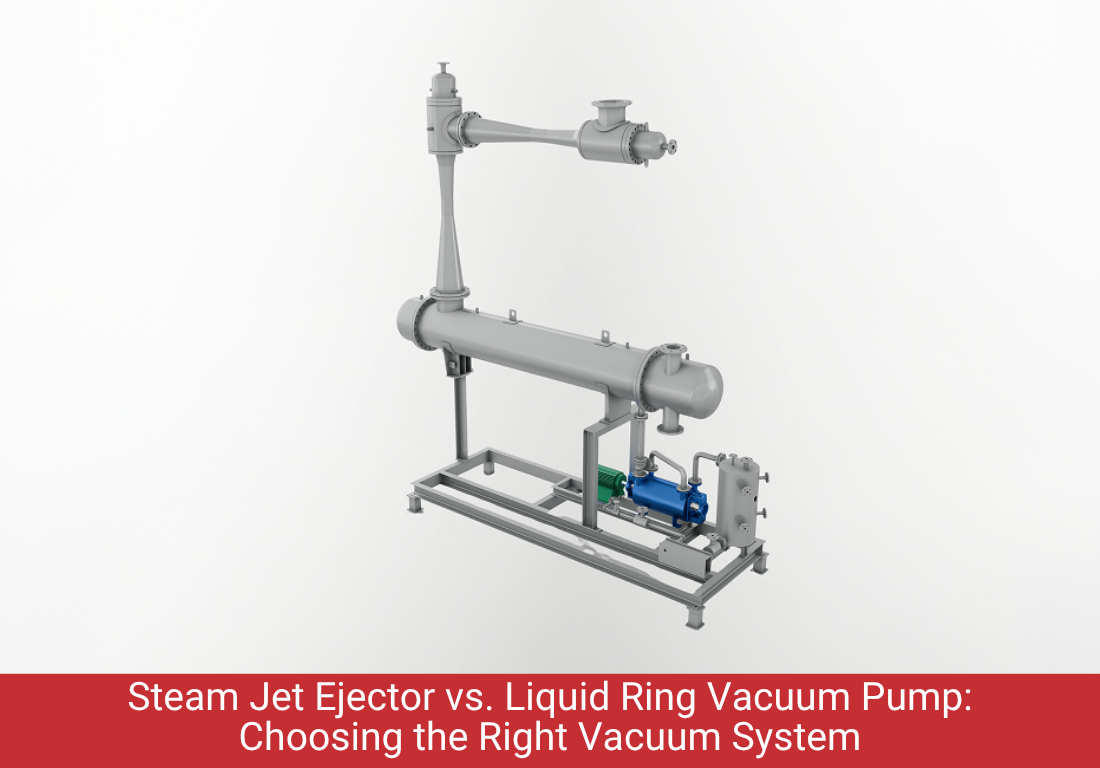
Comparing Two Core Industrial Vacuum Technologies for Distillation, Evaporation, and Process Applications
Industrial processes that rely on vacuum — distillation, evaporation, drying, degassing, and steam condensation among them — generally have a choice between two established technologies: the steam jet ejector and the liquid ring vacuum pump. Both can generate the vacuum levels many industrial applications require, but they do so in fundamentally different ways, and each brings a different set of trade-offs in steam consumption, maintenance, and operating flexibility.
Mazda Limited, an industrial vacuum equipment manufacturer based in Ahmedabad, India, since 1977, supplies both technologies — along with hybrid systems that combine them. This article looks at how each technology works, where each tends to be the better fit, and what factors are worth evaluating before choosing between them.
A steam jet ejector (sometimes called a steam jet vacuum pump) generates vacuum using high-pressure motive steam rather than a rotating mechanical pump. Steam is passed through a nozzle at high velocity, and this creates a suction effect that entrains air and non-condensable gases from the connected process equipment, drawing pressure down below atmospheric level.
Because the ejector itself has no conventional moving parts, it can offer a relatively simple, low-maintenance option for vacuum generation, provided the plant has a suitable supply of motive steam. Steam jet ejectors can be built as single-stage or multi-stage systems, and are commonly integrated with condensers to improve overall vacuum performance and recover condensate.
A liquid ring vacuum pump is a mechanical vacuum pump. It uses a rotating impeller inside a pump casing, with a sealing liquid (usually water) forming a ring around the impeller as it rotates. This ring creates a series of sealed chambers whose volume expands and contracts as the impeller turns, drawing gas in and compressing it for discharge.
Because a liquid ring vacuum pump doesn’t depend on a steam supply, it can be used in plants where steam availability is limited, intermittent, or costly. Being a mechanical pump, it does have moving parts and seals that require periodic maintenance, but it can generally provide continuous, stable vacuum performance suited to plants with variable operating schedules.
| Factor | Steam Jet Ejector | Liquid Ring Vacuum Pump |
|---|---|---|
| Moving Parts | None in the ejector itself | Yes—rotating impeller and seals |
| Utility Requirement | Continuous motive steam | Electricity and sealing liquid (usually water) |
| Typical Maintenance | Generally low | Routine maintenance of seals, bearings and sealing liquid |
| Best Suited For | Plants with steam already available | Plants with limited or costly steam |
| Vacuum Depth | Can be configured for deep vacuum in multi-stage arrangements | Effective for moderate, continuous vacuum duty |
| Handling Variable Loads | Can be less flexible under fluctuating gas loads on its own | Generally stable under continuous operation |
Neither technology is categorically “better” — the right choice depends on the specific process conditions, available utilities, and how the vacuum system needs to perform across the plant’s operating cycle.
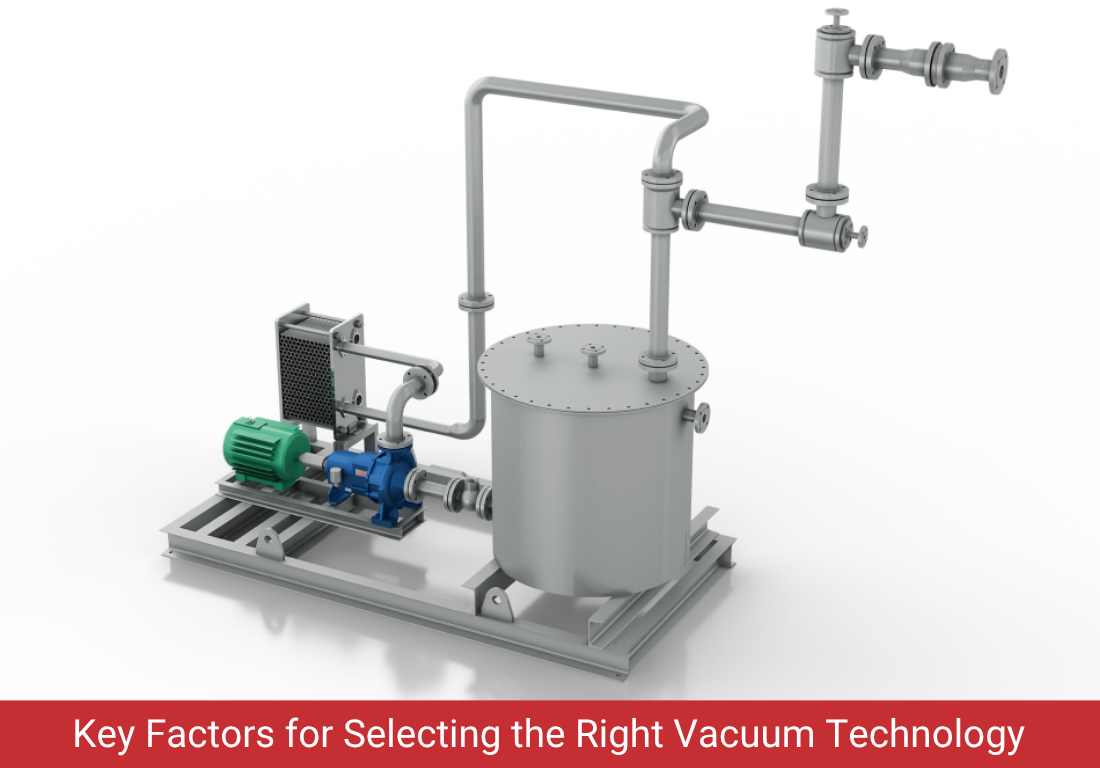
Some industrial applications don’t fit neatly into either category. Where a process experiences fluctuating vacuum loads, or where a plant wants the deep-vacuum capability of a steam jet ejector alongside the operating stability of a mechanical pump, a combination vacuum system pairing a steam jet ejector with a liquid ring vacuum pump can be considered.
In this arrangement, the steam jet ejector can provide strong initial suction, while the liquid ring vacuum pump supports continuous mechanical evacuation and helps stabilize vacuum levels as process conditions change. This can allow a plant to balance steam and electrical energy use according to what’s actually available, rather than being limited to a single technology’s characteristics.
Our Other Product
Selecting the right vacuum technology should start with the process requirement rather than a general preference for one technology over another. Factors worth evaluating include:
| If your situation is… | The better starting point may be… |
|---|---|
| Steam is already generated on-site and readily available | Steam Jet Ejector |
| Steam is limited, costly, or not available continuously | Liquid Ring Vacuum Pump |
| Vacuum demand fluctuates or deep vacuum with stability is needed | Combination Vacuum System (Steam Jet Ejector + Liquid Ring Vacuum Pump) |
This table is a general starting point rather than a substitute for engineering evaluation. Actual equipment selection should be based on detailed process data, utility costs, and site-specific operating conditions.
Mazda Limited manufactures both steam jet ejectors and liquid ring vacuum pumps, along with the combination systems that bring the two together. Because the company isn’t limited to a single vacuum technology, its engineering team can evaluate a plant’s actual process conditions and utility situation before recommending a configuration, rather than defaulting to whichever technology happens to be on offer.
Mazda Limited, established in 1977 and headquartered in Ahmedabad, India, is an engineering and manufacturing company specializing in industrial process equipment. Its capabilities extend across vacuum systems, heat transfer equipment, evaporation and crystallization, air pollution control, and non-chemical water treatment.
Mazda operates with certifications including ISO 9001, ISO 14001, and ISO 45001, along with relevant PED, IBR, ASME, and U-Stamp credentials across its engineering and manufacturing operations. The company develops equipment for domestic and international customers and focuses on application-specific engineering, manufacturing quality, and long-term technical support.
Steam jet ejectors and liquid ring vacuum pumps both remain widely used, well-proven technologies for industrial vacuum generation, and each has genuine advantages depending on the process. A steam jet ejector can offer simple, low-maintenance operation where steam is available; a liquid ring vacuum pump can offer steam-independent, continuous mechanical vacuum. Where neither technology alone fits the requirement, a combination system can bring the strengths of both together.
Looking for guidance on which vacuum technology suits your process? Contact Mazda Limited to discuss your operating conditions and identify the right vacuum system for your application.
A steam jet ejector generates vacuum using high-pressure motive steam and has no conventional moving parts, while a liquid ring vacuum pump is a mechanical pump using a rotating impeller and sealing liquid. The better option depends on steam availability, process load, and maintenance considerations.
Operating cost depends on the relative cost of steam versus electricity at a given site, along with maintenance requirements. Neither technology is universally cheaper; the comparison should be made using actual utility costs and process conditions.
Yes. Combination vacuum systems pairing a steam jet ejector with a liquid ring vacuum pump are used in applications with variable vacuum loads or where the strengths of both technologies are needed together.
No. A liquid ring vacuum pump is a mechanical pump that uses electricity and a sealing liquid rather than steam, which can make it suitable for plants with limited steam availability.
With a multi-stage configuration, steam jet ejectors can be designed for deep vacuum applications; single-stage units are typically used where a moderate vacuum is sufficient. The right configuration depends on the specific process requirement.
As a mechanical pump, it requires routine maintenance of components such as seals, bearings, and the sealing liquid system, in line with the manufacturer's recommended maintenance schedule.
A steam jet ejector has no conventional moving parts in the ejector section, which generally means lower maintenance than a mechanical pump, though associated equipment such as condensers may still require periodic upkeep.
Liquid ring vacuum pumps generally provide stable performance under continuous operation, while a combination system can offer additional flexibility where loads fluctuate significantly. The appropriate choice depends on the specific pattern of the fluctuation.
Yes. Mazda Limited manufactures steam jet ejectors, liquid ring vacuum pumps, and combination systems that bring the two together, allowing selection based on actual process and utility conditions.




Our team is available to provide professional support and will respond promptly to any inquiries or assistance you need.