


Read Our Article
Understanding Zero Liquid Discharge (ZLD): How MEE, MVR, and ATFD Work Together

A thermo compressor uses high-pressure motive steam to recompress lower-pressure steam, raising its pressure and temperature so it can be reused as heating steam instead of being discharged. This is the core mechanism behind Thermal Vapor Recompression (TVR) evaporators, and it reduces the fresh, boiler-supplied steam needed for a given evaporation duty. It has no moving parts and is commonly used in TVR evaporators, multi-effect systems, and desalination plants. Its effectiveness depends on matching its design to the plant’s specific steam conditions.
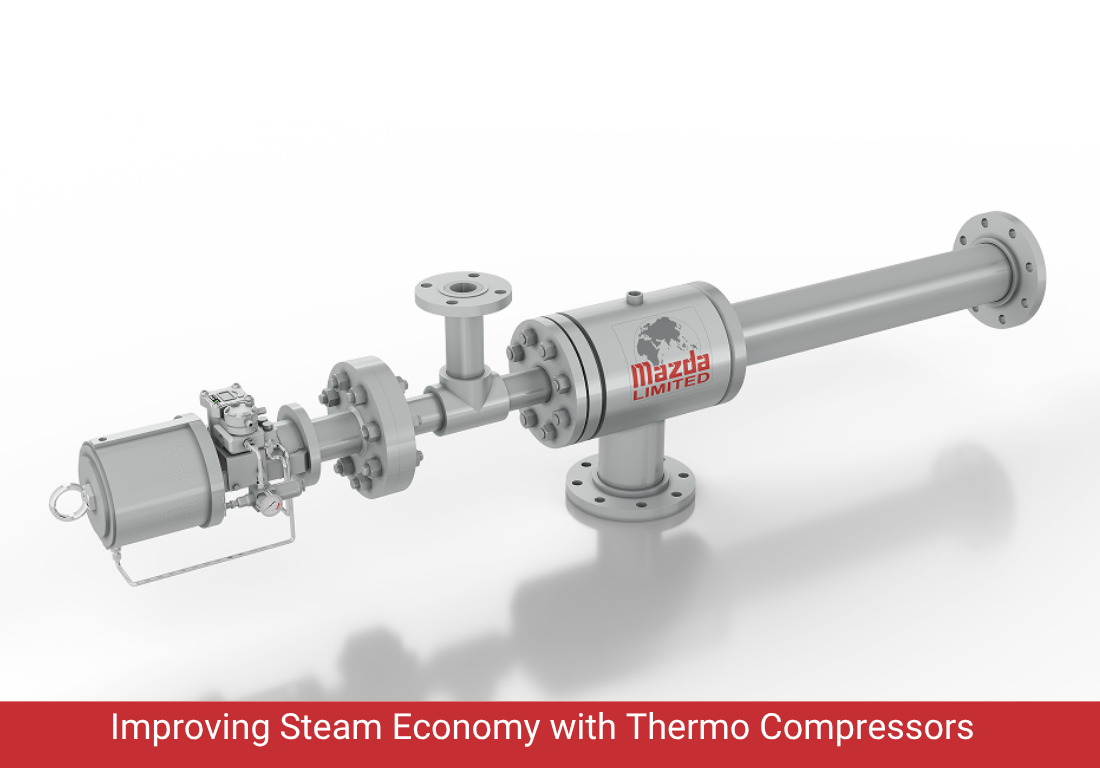
Understanding Steam Recompression and Its Role in Reducing Live Steam Demand
Steam is one of the largest recurring utility costs in evaporation, desalination, and other thermal process plants. A thermo compressor is one of the most established ways of reducing that cost — by recompressing and reusing steam that would otherwise be discharged at a lower, less useful pressure, rather than continuously drawing fresh steam from the boiler.
Mazda Limited, a thermo compressor manufacturer based in Ahmedabad, India, since 1977, has supplied thermo compressors across evaporation, desalination, and process heating applications. This article looks at how a thermo compressor works, why it improves steam economy, and where it’s typically applied.
A thermo compressor, also called a steam jet compressor, is a steam-jet device that uses high-pressure motive steam to entrain and recompress a stream of lower-pressure steam, raising its pressure and temperature so it can be reused as heating steam elsewhere in the process. It has no moving parts, working on the same general jet-entrainment principle as a steam jet ejector, but applied to recompressing steam rather than generating vacuum.
This recompression step means that steam which would otherwise be too low in pressure to usefully reheat, condense, or drive further evaporation can instead be reused, reducing how much fresh, high-pressure steam the boiler needs to supply.
In an evaporator, each evaporation stage produces vapor at a lower pressure than the steam that heated it. In a Thermal Vapor Recompression (TVR) evaporator, a thermo compressor takes a portion of this lower-pressure vapor and recompresses it using motive steam, then feeds the recompressed steam back into the process as heating steam for the same or an earlier effect.
Because part of the heating requirement is now being met by recompressed vapor rather than fresh boiler steam, the overall live steam demand for the same evaporation duty is reduced. This is the basic mechanism behind the steam economy improvement a thermo compressor provides — it doesn’t create additional energy, but it makes better use of the thermal energy already present in the lower-pressure vapor stream.
A thermo compressor’s performance depends on matching its nozzle and diffuser design to the specific motive steam pressure, suction steam pressure, and required discharge pressure of the application. Because these conditions vary by plant and process, thermo compressors are generally engineered for the specific duty rather than supplied as a fixed, standard unit.
According to Mazda’s own product information, its thermo compressors have been engineered to help plants reduce steam costs meaningfully in suitable applications, and the company has stated that its thermo compressor testing follows ASME PTC-24 steam-jet vacuum equipment performance test standards. As with any specific performance or cost-saving figure, the actual improvement achievable at a given site depends on that site’s own steam balance and should be confirmed through engineering evaluation rather than assumed from a general figure.
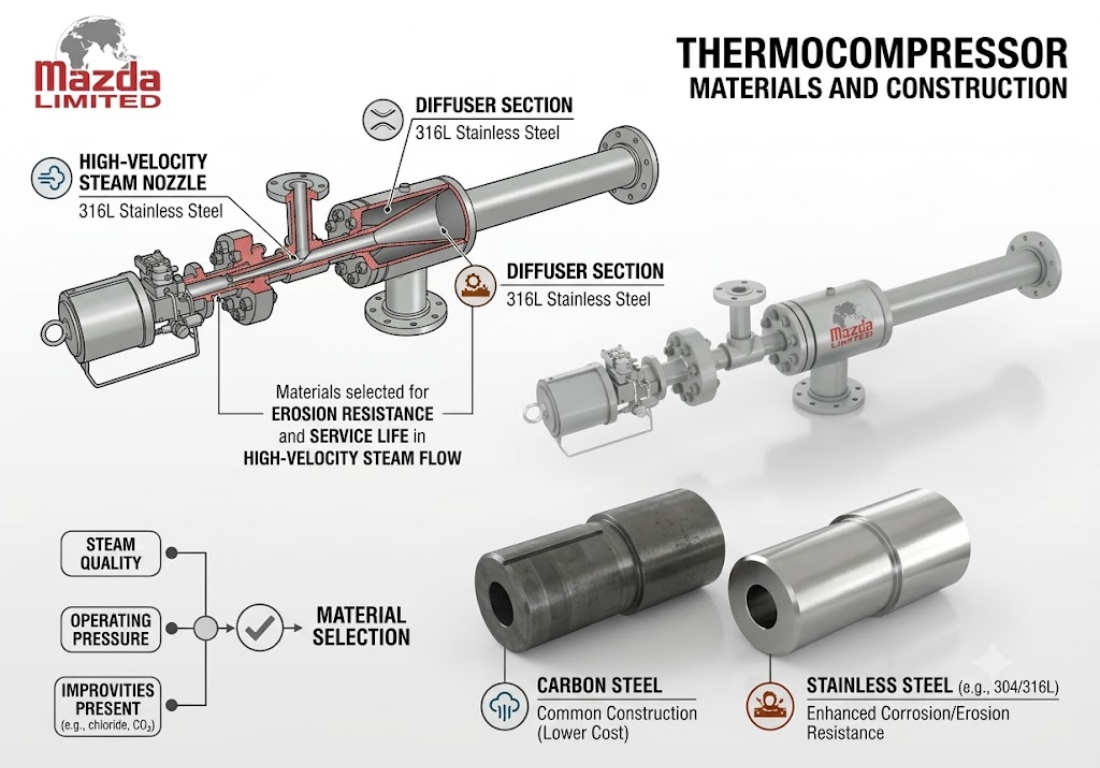
Like other steam-jet equipment, a thermo compressor’s nozzle and diffuser sections are exposed to high-velocity steam flow, and material selection affects both erosion resistance and service life. Common construction materials include carbon steel and stainless steel, with the specific choice depending on steam quality, pressure, and any impurities present in the motive or suction steam streams.
Because a thermo compressor has no moving parts, its long-term reliability depends more on correct initial sizing and material selection than on ongoing mechanical maintenance — which is part of why accurately specifying the motive, suction, and discharge conditions at the design stage matters so much to its performance over time.
While this article has focused on thermo compressors in the context of evaporation and TVR systems, the same steam-recompression principle is also used more broadly in process heating applications — anywhere a plant has a lower-pressure steam or vapor stream that could be usefully upgraded rather than vented or condensed without recovery. The underlying evaluation is the same regardless of the specific application: is there a genuine, recoverable steam stream, and does the plant’s steam balance justify recompressing it.
Our Other Product
| Without a Thermo Compressor | With a Thermo Compressor |
|---|---|
| Lower-pressure vapor is typically discharged or condensed without further use | Lower-pressure vapor is recompressed and reused as heating steam |
| Full heating duty is met by fresh boiler steam | Part of the heating duty is met by recompressed vapor, reducing fresh steam demand |
| Steam cost scales directly with evaporation duty | Steam cost can be reduced for the same evaporation duty |
A thermo compressor is generally most effective where there’s a genuine, usable lower-pressure vapor stream to recompress — the potential steam economy improvement should be evaluated against the plant’s actual steam balance rather than assumed.
Read Our Article
Mazda Limited, established in 1977 and headquartered in Ahmedabad, India, is an engineering and manufacturing company specializing in industrial process equipment. Its capabilities extend across vacuum systems, heat transfer equipment, evaporation and crystallization, air pollution control, and non-chemical water treatment.
Mazda operates with certifications including ISO 9001, ISO 14001, and ISO 45001, along with relevant PED, IBR, ASME, and U-Stamp credentials across its engineering and manufacturing operations. The company develops equipment for domestic and international customers and focuses on application-specific engineering, manufacturing quality, and long-term technical support.
A thermo compressor improves steam economy by recompressing lower-pressure vapor that would otherwise go unused, allowing it to be reused as heating steam and reducing the fresh steam an evaporator or process system needs to draw from the boiler. Its effectiveness depends on matching its design to the specific motive, suction, and discharge steam conditions of the application, and the actual steam savings achievable should be evaluated against a plant’s own steam balance.
Looking for guidance on whether a thermo compressor could improve steam economy in your evaporation or process system? Contact Mazda Limited to discuss your steam balance and identify the right thermo compressor design for your application.
A thermo compressor uses high-pressure motive steam to recompress lower-pressure steam, raising its pressure so it can be reused as heating steam elsewhere in the process, reducing the amount of fresh steam required.
Both work on the same jet-entrainment principle and have no moving parts, but a thermo compressor recompresses steam for reuse as heating steam, while a steam jet ejector removes air and non-condensable gases to generate vacuum.
A thermo compressor doesn't create additional energy — it makes better use of thermal energy already present in lower-pressure vapor that would otherwise go unused, which can reduce the fresh steam a plant needs to supply for the same process duty.
Thermo compressors are commonly used in Thermal Vapor Recompression (TVR) evaporators, multi-effect evaporation systems, desalination plants, and general process heating applications involving steam reuse.
Depending on the existing system's design and steam conditions, retrofitting a thermo compressor may be possible. This requires an engineering evaluation of the plant's current steam balance and evaporator configuration.
The required motive steam pressure depends on the specific application's suction and discharge steam conditions, and thermo compressors are generally engineered to match these conditions for each installation.
The actual reduction depends on the specific application's steam balance and design. Any general figure should be confirmed through engineering evaluation for the specific plant rather than assumed.
According to Mazda's own product information, its thermo compressor testing follows ASME PTC-24 steam-jet vacuum equipment performance test standards.
Yes. Mazda Limited manufactures thermo compressors engineered for the specific motive, suction, and discharge steam conditions of applications including TVR evaporators, multi-effect systems, and desalination plants.
Common materials include carbon steel and stainless steel, selected based on steam quality, pressure, and any impurities present in the motive or suction steam streams for the specific application.
Yes. The same steam-recompression principle can be applied in general process heating applications wherever a lower-pressure steam or vapor stream could be usefully recompressed rather than vented or condensed without recovery.




Our team is available to provide professional support and will respond promptly to any inquiries or assistance you need.